Trading gold means taking a position on whether its price will rise or fall.
Two ways to trade gold without buying bullion are gold CFDs and gold futures.
Trading gold with CFDs or futures
Gold CFDs (XAU/USD)
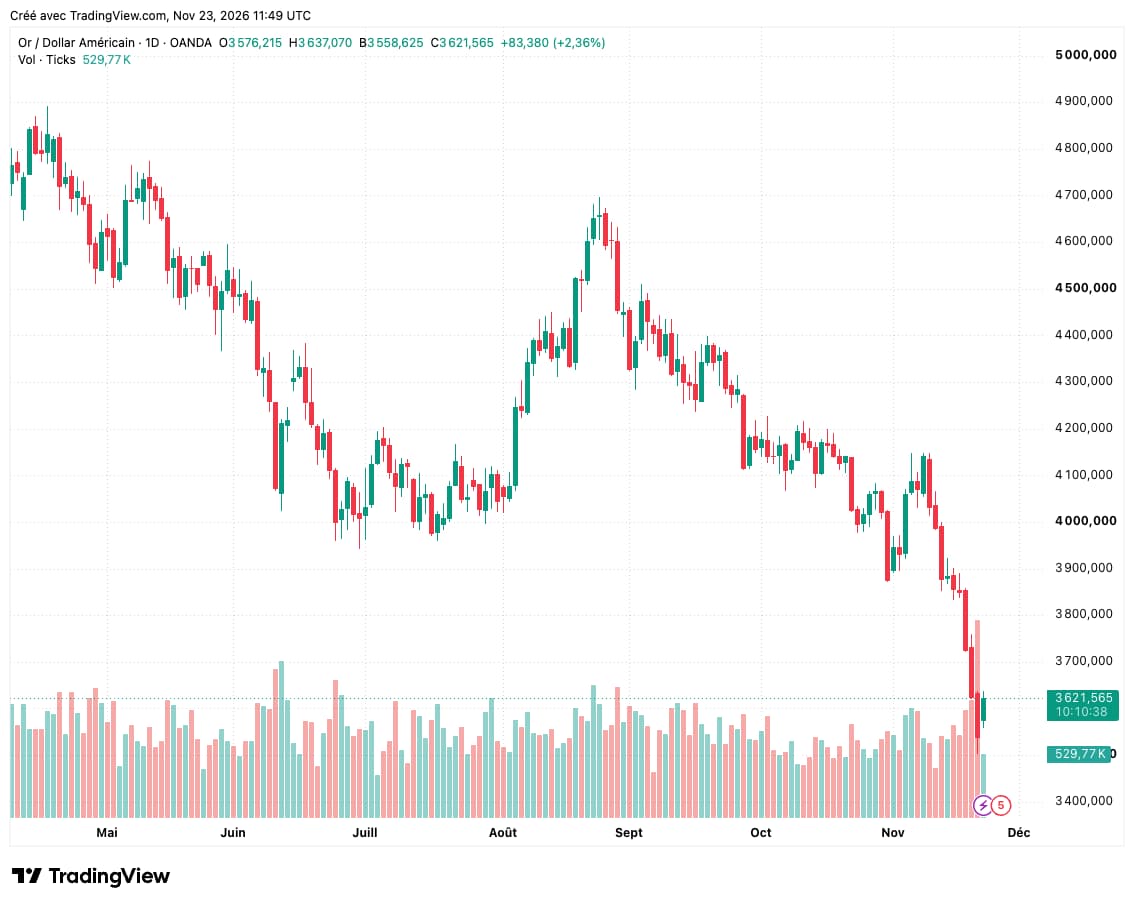
When you trade a gold CFD, your broker's XAU/USD quote shows its price in US dollars for one troy ounce of gold, or about 31.1 grams.
Two brokers can quote different buy and sell prices for gold at the same time.
The amount of gold your position represents depends on how many lots you trade and how your broker defines one lot.
If one lot represents 100 ounces, a 0.10-lot position represents 10 ounces.
Gold futures (GC and MGC)
One Gold futures contract (GC) represents 100 ounces, and one Micro Gold contract (MGC) represents 10.
Each contract has an expiration month.
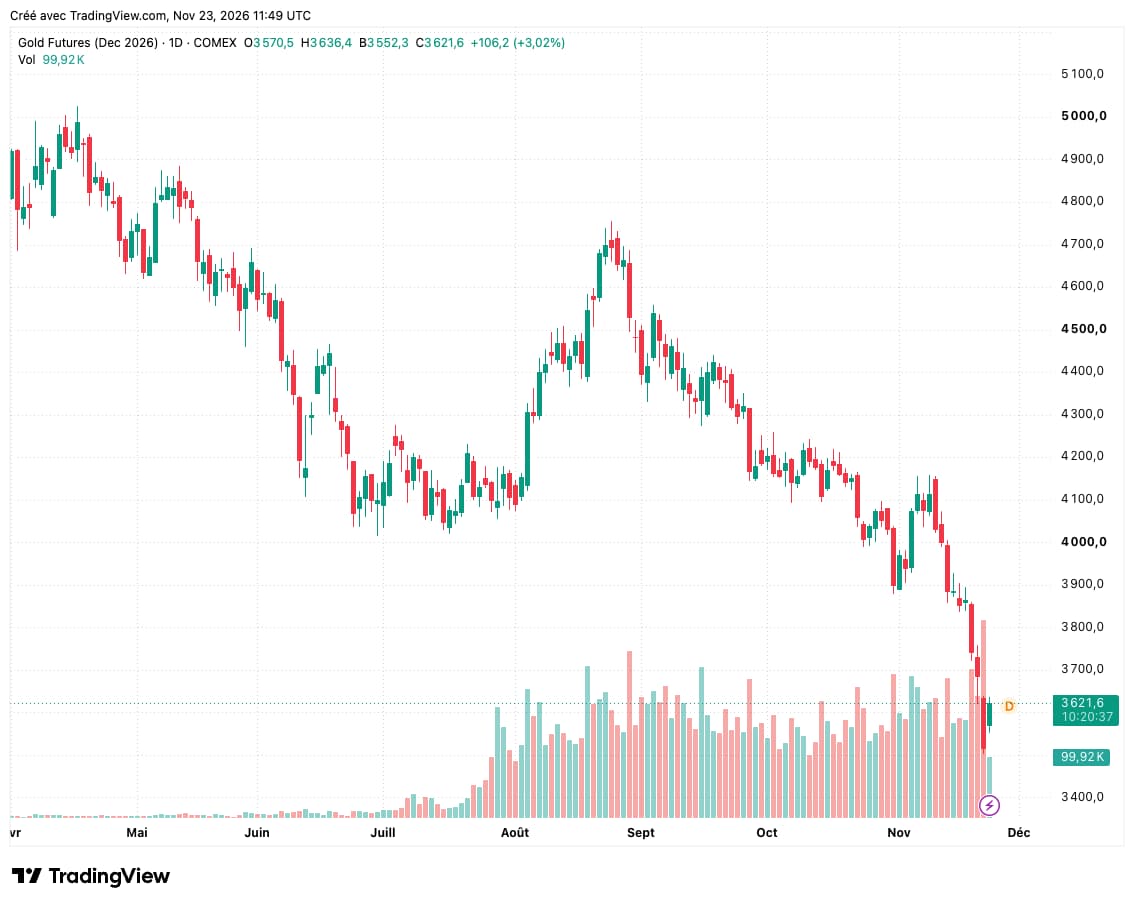
Prices for both contracts move in ticks of $0.10 per ounce.
A one-tick move is worth $10 on one GC contract and $1 on one MGC contract.
Planning a gold trade
The move you're looking to trade depends on your trading style.
If you buy gold on Monday and plan to hold it until Friday, an announcement on Wednesday could move the price while your trade is open.
Market conditions before you enter
An economic calendar lists the dates and times of upcoming announcements.
These include US inflation releases and rate decisions from the FOMC, the committee that sets the Federal Reserve's target range for its policy rate.
Inflation and US interest rates
Suppose US prices rise faster than expected.
Investors may then expect the Fed to keep interest rates high for longer.
Some may prefer to buy US bonds because they pay interest, which can reduce demand for gold.
If an announcement is due shortly, you can wait to see how gold reacts before deciding whether you still want to enter at that price.
How the dollar affects gold buyers
If the dollar price of an ounce stays the same but the dollar rises against the euro, a buyer in the euro area needs more euros to buy that ounce.
They may decide to buy less.
In a crisis, other buyers may be willing to pay that higher price to keep part of their savings in gold.
From the chart to a trade
If gold has been rising or falling for several sessions, you might look for a trade in the direction of the trend.
When the price moves back and forth between two levels, it's trading in a range.
You might then consider buying near the bottom of the range or selling near the top.
In either case, you can decide in advance what you want to see on the chart before entering and where you'd exit if the trade idea proves wrong.
My approach to trading gold
When I trade gold, I use the volume profile and VWAP to identify prices where I'd consider buying or selling.
My strategy is based on order flow.
When the price reaches an area I'm watching, I look at how it responds to buying and selling before deciding whether to take a position.
Near the bottom of a range, I consider two scenarios.
- For a long trade, I wait to see whether buyers push the price back up. If I enter, my target is the middle of the range, as I explain in my gold analysis.
- For a short trade, I want to see the price drop below the range and then return to its lower boundary. Before entering, I wait for sellers to push the price down again. If the price moves back inside the range and stays there, I drop the short idea.
In the long scenario, I use the most recent low as a reference for my stop.
Before entering, I compare what I could lose if the price reaches my stop with what I could make if it returns to the middle of the range.
Sizing a gold position
Suppose you buy gold and place your stop $5 per ounce below your entry price.
If you're willing to risk $50 on the trade, that gives you a position of 10 ounces (50 / 5 = 10).
Position size in lots on XAU/USD
If your broker uses 100-ounce lots, 10 ounces is 0.10 lots.
In the XAU/USD lot size calculator, one pip represents a move of $0.01 per ounce.
For a stop $5 from your entry, the distance to enter is 500 pips (5 / 0.01).
Number of GC or MGC contracts
One MGC contract gives you the 10 ounces you're looking for.
With the same stop, one GC contract would put your loss at $500, well above your $50 risk budget.
In the futures position size calculator, that stop distance is 50 ticks.