
What is a CFD?
A CFD, or contract for difference, is a financial contract that lets you speculate on an asset's price movements without owning the asset.
When you trade CFDs:
- You don't own the underlying asset, such as shares or commodities
- You're simply betting on the price rising or falling
- You make or lose money according to how price moves
The advantages of CFDs
You don't need to own the asset
Imagine you want to speculate on oil prices. Without CFDs, you'd end up in an absurd situation.
You'd have to buy barrels of oil, find somewhere to store them, then sell them when the price rose.
That's impractical, potentially dangerous and certainly illegal for a private individual.
But CFDs make it simple.
You trade oil prices from your computer or even your phone. No storage, security or logistics to worry about.
You simply benefit from price changes without ever seeing or smelling a drop of oil.
They're easy to use
CFDs open up access to financial markets and let anyone with an internet connection become a trader.
You don't need mountains of paperwork or a large amount of capital to get started.
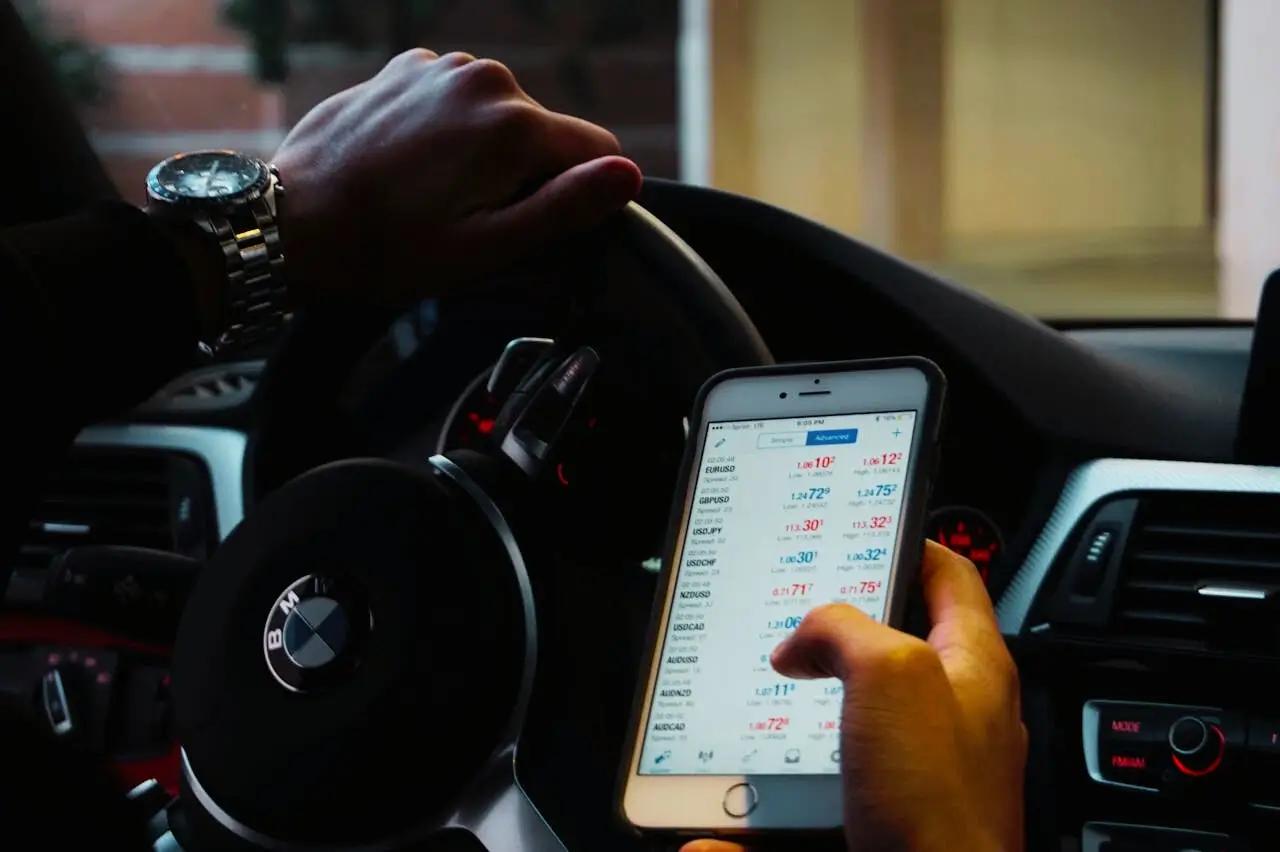
Three simple steps are enough:
- Open an account with a broker
- Deposit money
- Start trading by clicking Buy or Sell
I've written a complete guide to learning to trade properly. Go and read it.
You can short easily
Shorting means selling an asset you don't own in the hope its price will fall. You buy it back at a lower price to make a profit.
Traditionally, it's a complicated strategy to put into practice.
Without CFDs, if you think a stock will fall:
- You first have to borrow it
- Sell it
- Wait for the price to fall
- Buy it back
- Return it
The process is complicated, expensive and risky. CFDs simplify it.
Want to bet on Tesla falling?
One click on Sell and you're done. You profit if price falls and lose if it rises.
You can access different markets
CFDs give you access to a wide range of financial markets.
You can move from a US index trade to gold, then to currencies, all in a few clicks.
You can use leverage
Leverage lets you take positions larger than your capital would normally allow.
The disadvantages of CFDs
Counterparty risk
When you trade CFDs, your broker becomes your counterparty.

A broker is an intermediary that facilitates transactions for buyers and sellers.
That means:
- You deposit your money with the broker
- The broker is responsible for your capital
- If it goes bankrupt, your money is at risk
For example, in 2015, FXCM nearly went bankrupt following a Swiss National Bank decision. Clients came close to losing everything.
Brokers don't always benefit from the same insolvency guarantees as banks.
How do you choose a CFD broker?
- Read reviews from other traders
- Compare fees across several brokers
- Choose a regulated broker, with AMF oversight in France
- Check whether it offers client-fund protection
Personally, I've used AvaTrade, regulated by the AMF, for years and I'm very happy with it.
Conflicts of interest
In CFD trading, your broker makes money in two ways.
- It collects spreads and commissions on your trades
- It also profits from your losses, because it's your counterparty
A trader making money = a broker losing money.
That can have several consequences.
Your broker might be tempted to encourage more risk-taking.
The more risk you take, the more likely you are to lose, and the more it earns.
It might also decide to restrict accounts that perform too well.
And let's be honest: it doesn't have much incentive to help you become profitable.
Price manipulation
Some unscrupulous CFD brokers can manipulate prices to make you lose.
How?
They can artificially trigger your stop loss
Imagine placing a stop loss at 1.2000 on EUR/USD.
The actual market price is 1.2010, but your broker briefly quotes 1.1999, triggers your stop, then returns to 1.2010.
You've lost money even though the market never actually reached your stop.
They can widen spreads at crucial moments
Just before a major economic announcement or during high volatility, they increase the gap between the buy and sell prices.
The result?
You pay more to enter and exit positions.
They can delay executing your orders
You want to buy at €100, but the broker waits for price to reach €101 before executing your order.
These practices are, of course, illegal. The problem is that they're very difficult for individual traders to prove.
You aren't trading the "real" market
Unlike futures, trading CFDs doesn't mean participating directly in the underlying market.
What does that mean in practice?
- Price movements can differ
- Your trades have no impact on the real market
- You don't have the rights attached to owning the asset, such as share dividends
- It's like owning an NFT of a Lamborghini instead of the actual car
