
What is an NFT?
In case you haven't had an internet connection for the past few years, let me remind you what NFTs are.
Non-fungible tokens, or NFTs, are pieces of art backed by an asset on a blockchain. Put simply, it's an image proving that you own a line of code on a blockchain.
I'll give you that: it isn't an easy concept to grasp if you're new to crypto.
What you need to remember is that an NFT proves you're the holder of a digital asset.
The digital gold rush
From a little-known sector with modest sales, the NFT market grew spectacularly. Sales volume multiplied more than 260 times, from $94.9 million in 2020 to more than $24.9 billion in 2021.
Plenty of NFTs with no benefit attached to owning them sold for millions of dollars.
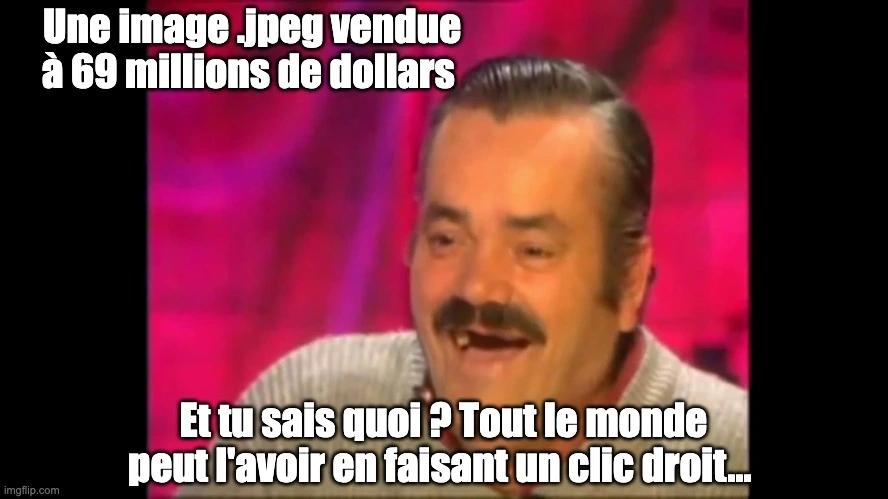
Yes, really. You're not dreaming.
The standout event was the auction of Beeple's NFT "Everydays: The First 5000 Days" for a record $69.3 million on 11 March 2021.
That sale, alongside Bored Ape Yacht Club and CryptoPunks selling for exorbitant prices, seemed to promise a bright future for NFTs.
And for the following year, it did. You could call it a digital gold rush.
After reading that, you might be wondering:
How do you explain investors spending millions of dollars on simple JPEG images?
Finance has plenty of mysteries, but the answer here is very simple.
Human nature.
The excitement around NFTs was mainly driven by investors' greed, appetite for money and irrationality.
Or let's call them what they were: reckless gamblers and misunderstood visionaries.
The idea of making thousands of euros without doing anything went to a lot of people's heads.
Looking back, the irrationality surrounding NFTs and the consequences to come were very predictable.
A speculative bubble had formed. Like every bubble before it, it would eventually burst.
The collapse
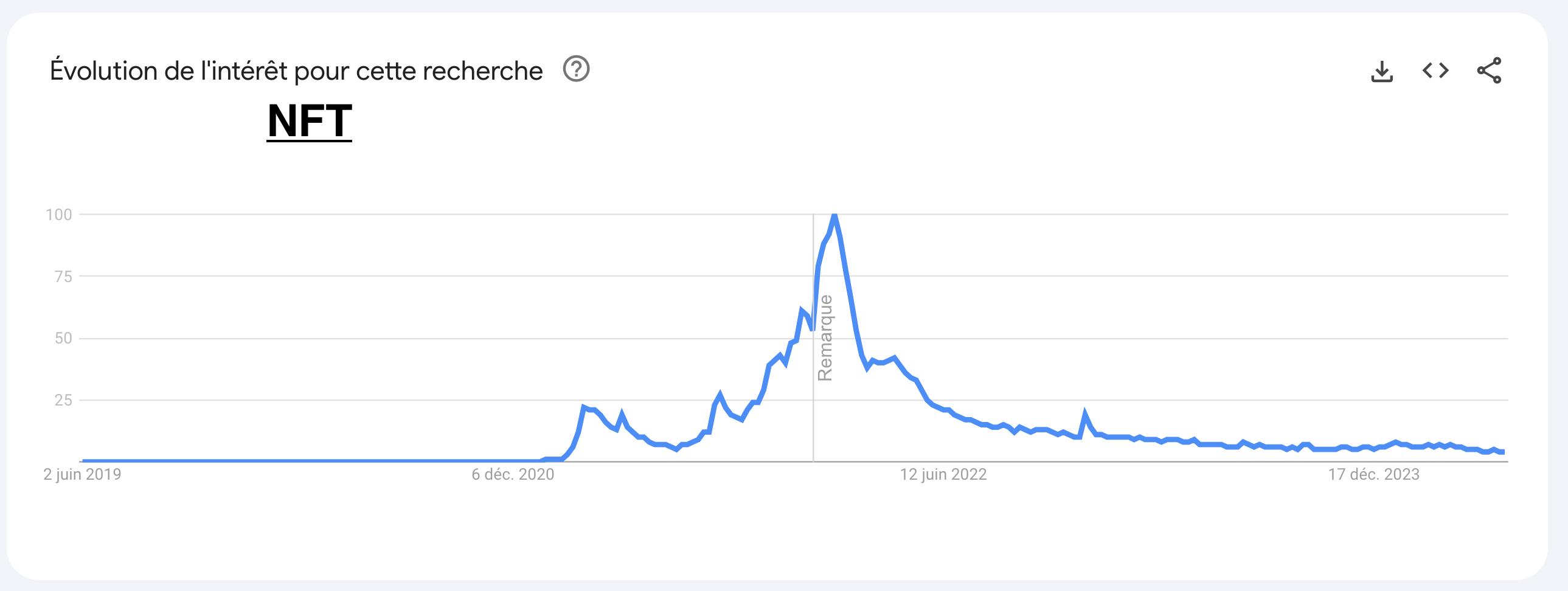
From the start of the NFT craze, Gary Vaynerchuk, the well-known entrepreneur and creator of VeeFriends NFTs, said that most NFT projects had no utility and their prices would go to zero.
Against all expectations, no kidding, who could have seen that coming 😉, enthusiasm quickly faded and the collapse began.
The main culprits were the lack of real utility in owning NFTs and the bear market, a market trending downwards. A nightmare for crypto bros and degens.
The easy money was over.
Investors and gamblers simply lost confidence in crypto, which led them to lose confidence in NFTs too.
As with every speculative bubble, some investors profited, but many others lost.
They're still kicking themselves.
NFTs: a Ponzi scheme too familiar to work again?
One possible future for NFTs is that the enthusiasm never returns.
With little real utility for now, I think we can safely say the technological revolution NFTs were supposed to bring hasn't arrived yet.
The ecosystem isn't mature enough, and most market participants see only the speculative side.
You might therefore think investors have realised it was more of a Ponzi scheme than a world-changing technological revolution.
A Ponzi scheme uses new investors' money to pay earlier investors, without a real profit-generating business behind it.
But I don't think that's what's happened...
As I said earlier, crypto markets are mainly driven by greed and irrationality. They're often described as a market full of apes.
And rightly so.
The appearance of easy, real profits is enough to get the machine going again. But once again, the losers will be those who arrive at the end, when the party's over.
When money is involved, human greed and irrationality never end
Where there's life, there's hope.
A crypto bro who put 8 years of savings into an NFT of Homer Simpson
The second possible scenario for NFTs, and the more likely one in my opinion, is a fresh wave of enthusiasm.
Let's remember that people rarely learn from past mistakes. History tends to repeat itself.
A crypto bull run and its effect on NFTs is a dream setup for getting rich.
Crypto enthusiasts know that Bitcoin's halving is the main driver of bull-market cycles.
Who wouldn't want to make money doing nothing?
As long as the hype lasts, investors chasing profits will keep putting money in.
But the biggest beneficiaries will be the project creators, the people issuing NFTs on trading platforms.
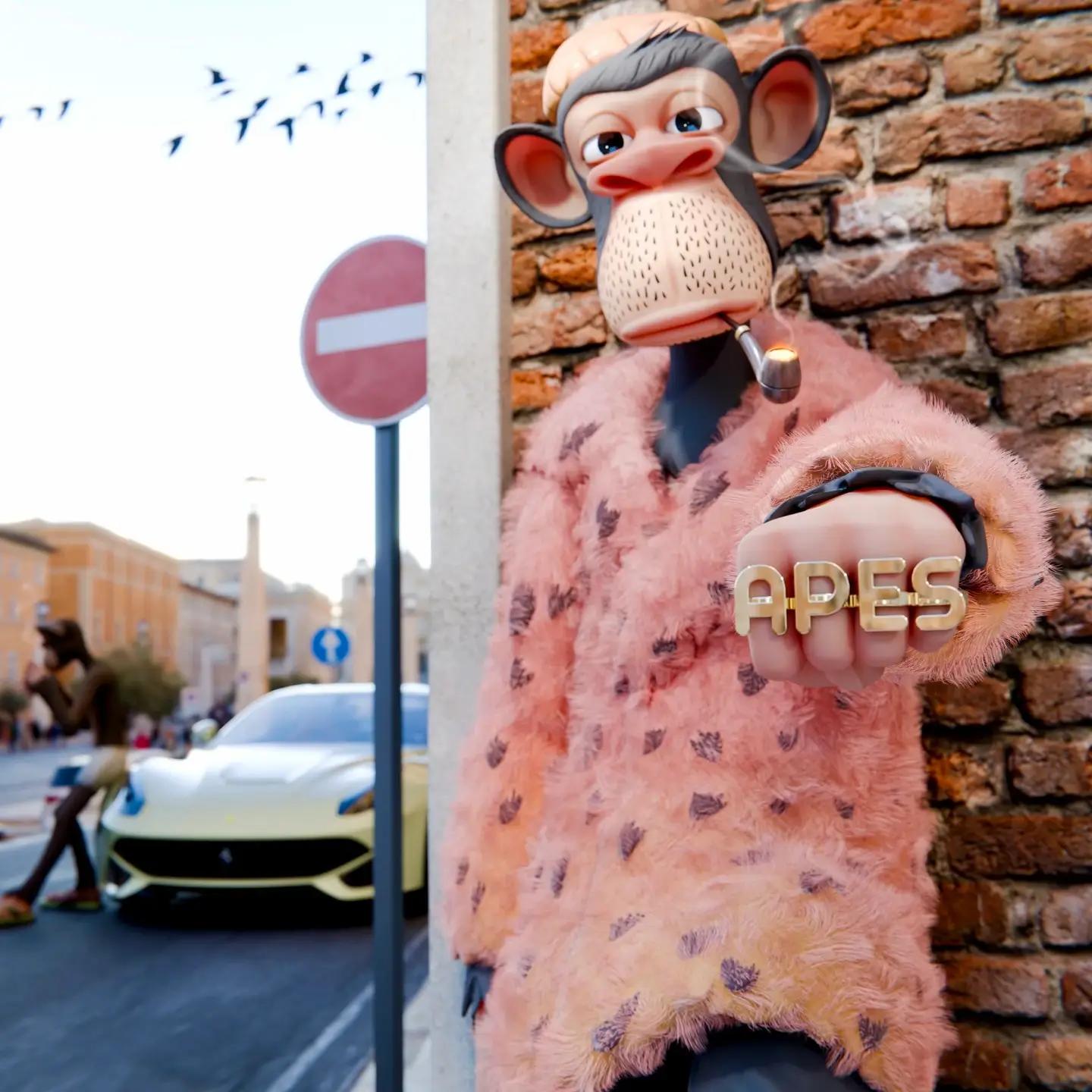
Source and Bored Ape creator: @baileytattoo
