
You shouldn't choose a broker based only on marketing claims.
As both an investor and a trader, I've seen how much the right choice can vary depending on what you need it for.
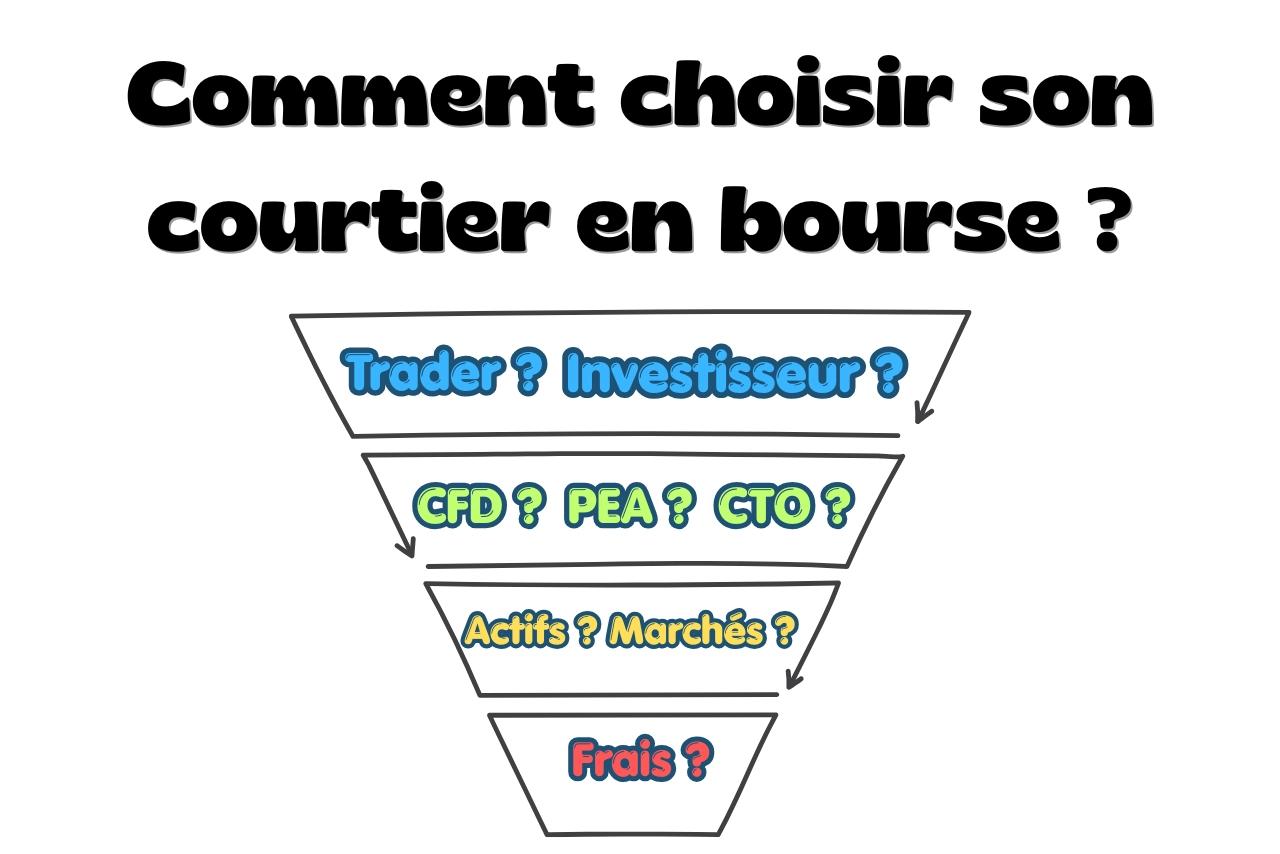
Here's the order I recommend:
- Decide whether you want to invest or trade
- Choose the account type you need: PEA, CTO or CFD
- Check that recognised authorities regulate the broker
- Check available markets and assets
- Compare fees based on how you'll actually use it
- Check how responsive support is
Step 1: Investing or active trading
Many beginners mix these two approaches up, and that's often a mistake.
A broker suited to a long-term PEA isn't necessarily suited to active trading, and vice versa.
To work out which category you're in, ask yourself:
Do you want your money to work for you over the long term, or to generate short-term income?
If you want to invest savings, gradually build wealth and avoid watching markets every day, you're taking an investing approach.
You buy assets to hold for months or years and own them directly, such as Apple shares or a global ETF.
Your priorities are account type, recurring fees and access to the ETFs or stocks you want.
If you want short-term positions, to profit from moves in indices, Forex or commodities, and you're prepared to follow markets actively, you're taking a trading approach.
You don't own the asset directly: you might take an S&P 500 position through a CFD to profit from an intraday rise or fall.
What matters here is execution quality, spreads, overnight fees and platform stability.
Wanting to do both is perfectly common.
In that case, you'll probably need two intermediaries, one for each purpose.
For example, I have an account with AvaTrade for CFD trading and one with BoursoBank for investing.
Step 2: Choose the account type and provider
In France, this involves two decisions: which account you need and which type of provider offers it.
Account types
The PEA is designed for long-term investing within a favourable tax framework.
After 5 years, capital gains and dividends are subject only to social levies of 18.6%.
It's limited to European shares and certain eligible ETFs, with a €150,000 contribution cap.
The PEA-PME follows the same tax principle but focuses on European small and medium-sized enterprises and intermediate-sized companies.
It can complement a PEA, with a separate €225,000 cap.
The CTO, an ordinary securities account, gives unrestricted access to global markets, US stocks and a broader range of assets, without a contribution cap or geographical restriction.
Gains are subject to the 31.4% PFU flat tax.
If you're unsure which to open first, I've covered choosing between a PEA and a CTO in a dedicated guide.
A CFD account works differently: you don't own the securities outright. You use leverage to speculate on price changes in either direction.
Which type of provider should you use?
Once you know which account you want, the question is where to open it.
Not every intermediary offers the same wrappers.
Specialist online brokers mainly offer CTOs, sometimes a PEA, with some of the lowest brokerage fees available.
They don't provide associated banking services.
Online banks offer all three investment wrappers, CTO, PEA and PEA-PME, alongside banking services.
Their brokerage fees are often a little higher than specialist brokers', but everything is in one place.
That's the choice I made for my long-term investments.
CFD brokers focus on active trading.
Some also offer a CTO or PEA, but leveraged derivatives remain their core business.
If you trade actively, that's where to look. Having a second intermediary dedicated to that purpose is perfectly normal.
To save time researching, use the stockbroker comparison.
Step 3: Check authorisation and regulation
If a broker isn't properly regulated and goes bankrupt, your funds may be frozen or lost.
A regulated broker must separate client assets from its own funds. If it goes bankrupt, your securities aren't part of the company's balance sheet and are returned to you.
That's why this check comes before fees or the platform.
First, check the financial agents register, REGAFI.
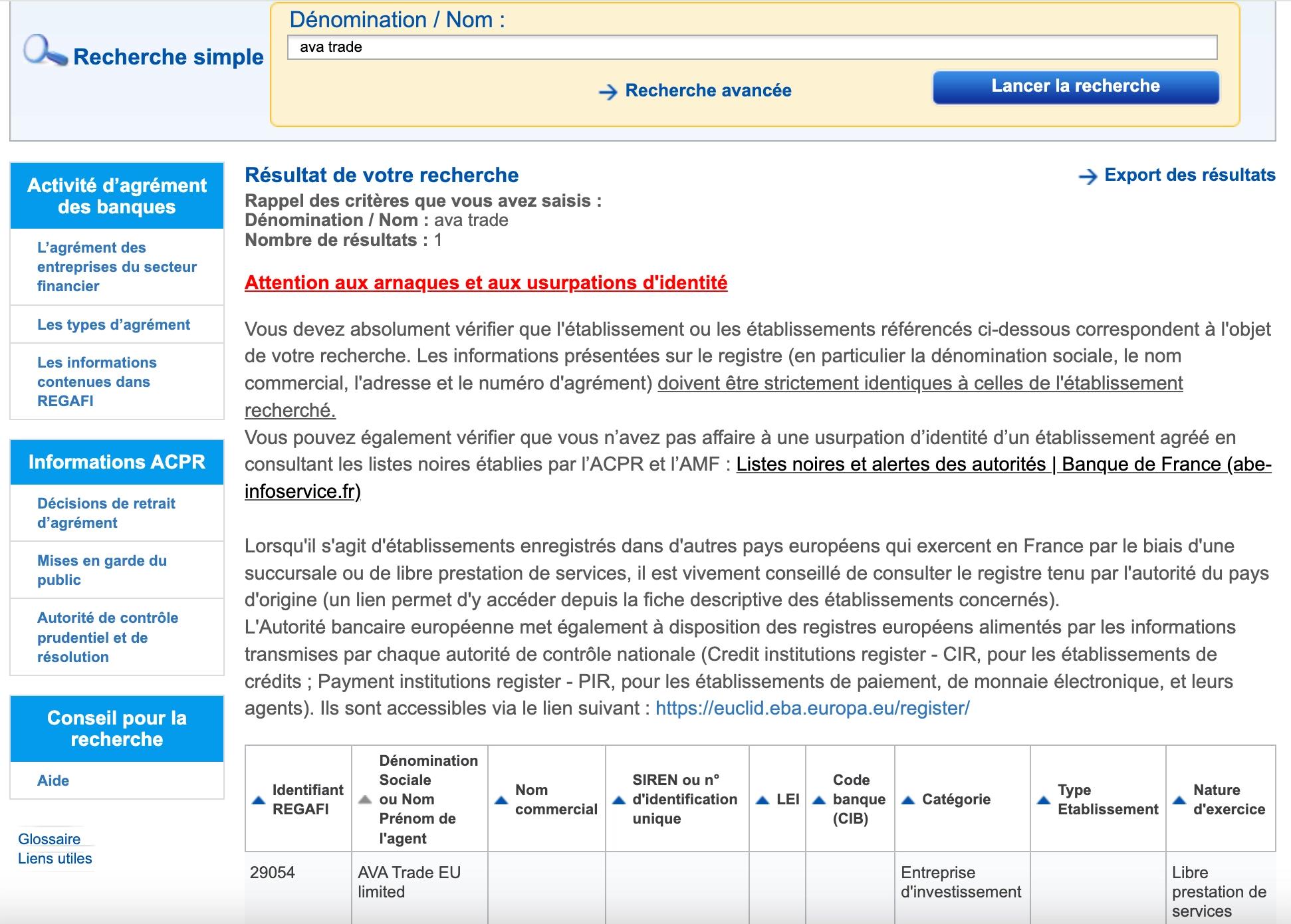
A broker established in the EEA can operate in France through MiFID II passporting and should appear on REGAFI with the corresponding status.
If it has no French branch, a dispute may fall under its home country's authority and may not qualify for AMF mediation.
Once you've confirmed its REGAFI listing, check who supervises it. Not all regulators are equally demanding.
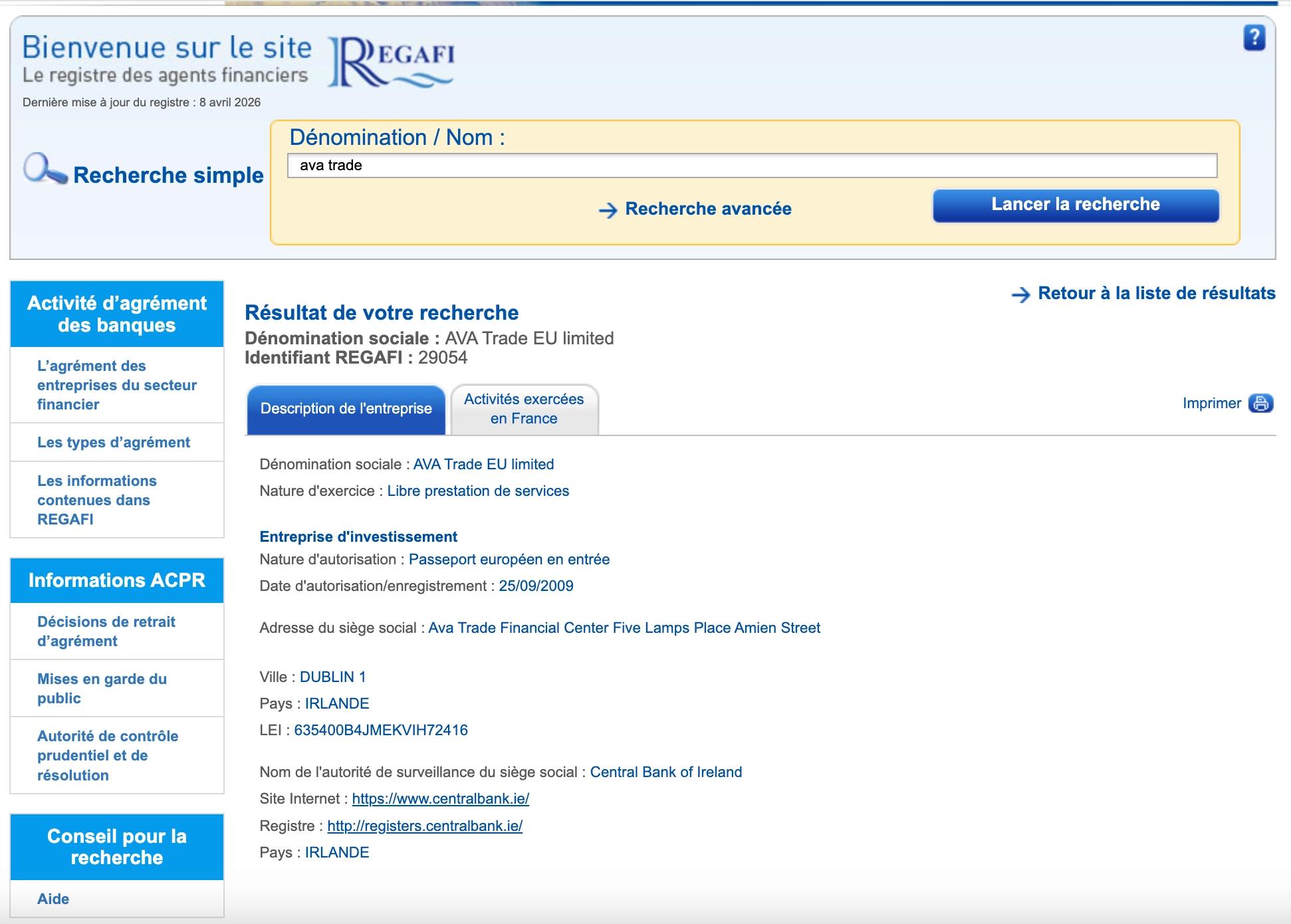
France's AMF and ACPR and Germany's BaFin are among the most demanding.
CySEC regulation in Cyprus is valid under MiFID II but generally less restrictive, which is why CFD brokers often use it.
Step 4: Check available markets and assets
Two brokers can have similar fees but very different offerings.
Check actual access to the markets and assets you want: French, European or US stocks, ETFs, indices, Forex and commodities.
If you mainly invest in ETFs, check that the ones you want are available in the right account wrapper.
If you trade specific instruments, check the terms for those exact underlying assets.
Step 5: Compare fees for your actual usage
Calling a broker cheap means nothing until you relate its fees to how you'll use it.
An investor placing one order a month has different needs from a trader opening several positions a day.
Fees relevant to everyone
Brokerage fees may be a fixed charge, a percentage, a minimum per order or a combination.
What matters is the charge on the amount you actually invest.
A €1 minimum on a €50 order is already a 2% fee.
Transfer fees for changing brokers aren't always zero. Some institutions charge per holding, which can be expensive for an already diversified portfolio.
Investing-specific fees
Custody fees have disappeared at many online brokers, but some banks still charge them.
For long-term investing, these annual charges can matter more than brokerage fees themselves.
Currency conversion fees are often underestimated.
If you invest in assets denominated in another currency, conversion charges can vary considerably between brokers.
Inactivity fees apply when you don't place enough orders within a given period.
If you invest infrequently, check this before opening an account.
CFD trading fees
CFD brokers have a different structure. Costs often come through the spread, the difference between buying and selling prices each time you enter.
Some instruments, particularly certain stock CFDs, also carry commissions.
For a trader placing many orders, those costs add up quickly.
Then there are overnight financing fees if you hold positions beyond the session.
For pure day trading, these are often secondary. For CFD swing trading, they become an important criterion in their own right.
Step 6: Check support responsiveness
Support matters the day something goes wrong: an order won't go through, you can't log in or you have a question about your French IFU tax statement before filing.
That's exactly why you need to consider it beforehand.
Check support hours, available channels such as chat, phone and email, and whether French-language support is available.
