
FTMO is one of the oldest prop firms and probably the best CFD prop firm on the market.
Here's my experience with its rules, pros and cons, and the account type I'd recommend today.
1) Account types
FTMO offers two challenge formats: one-step and two-step.
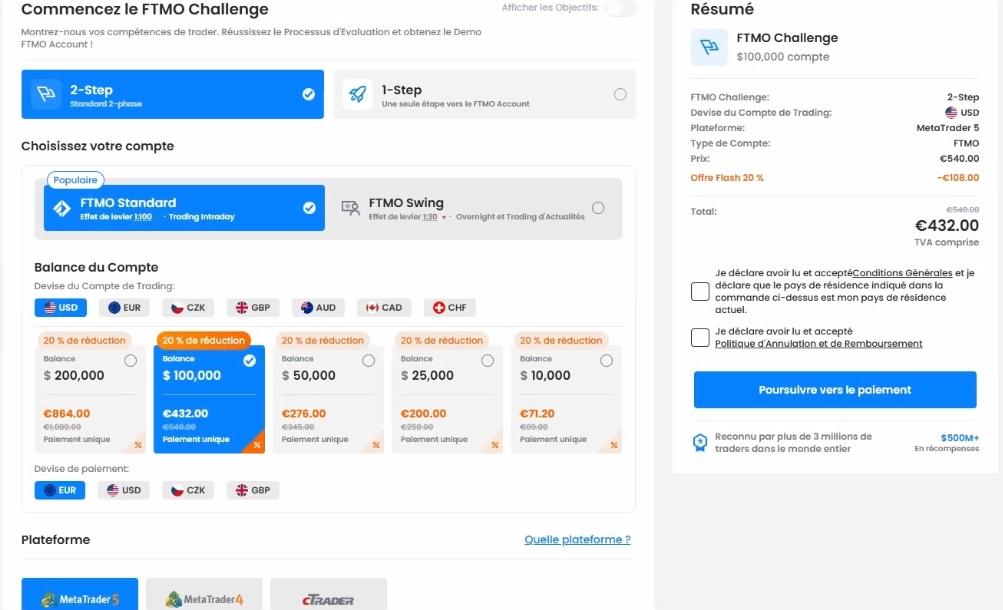
The one-step challenge is always cheaper and has a 10% profit target.
Its structure is closer to that of some Futures prop firms, particularly its end-of-day drawdown.
The two-step challenge costs more, but its drawdown rules are easier to manage. It requires a 10% profit target in the first phase, followed by 5% in the second.
Unlike the one-step challenge, it uses a 10% static drawdown.
Depending on the challenge, the maximum daily loss is either 3% or 5%.
The one-step challenge also has a 50% consistency rule, while the two-step challenge requires at least four trading days.
FTMO also offers two account options:
- Standard
- Swing
The Swing account allows overnight positions and trading during economic news releases, but with lower leverage.
2) Advantages
Drawdown type
For me, the two-step challenge is FTMO's most attractive format.
Its static drawdown is more in line with the main appeal of a CFD prop firm.
Challenge fees refunded
If you reach the funded stage and receive your first payout, the challenge fee is refunded.
That reduces the actual cost, provided you complete the whole process.
The rules
The two-step challenge rules remain fairly flexible.
There is no consistency rule on this format, which makes it possible to pass quickly.
I still wouldn't recommend rushing through it, because that tends to make you take more risk.
FTMO also allows weekend trading on some instruments. This gives you more flexibility if you want to hold positions longer or trade markets that are open at those times.
Getting started
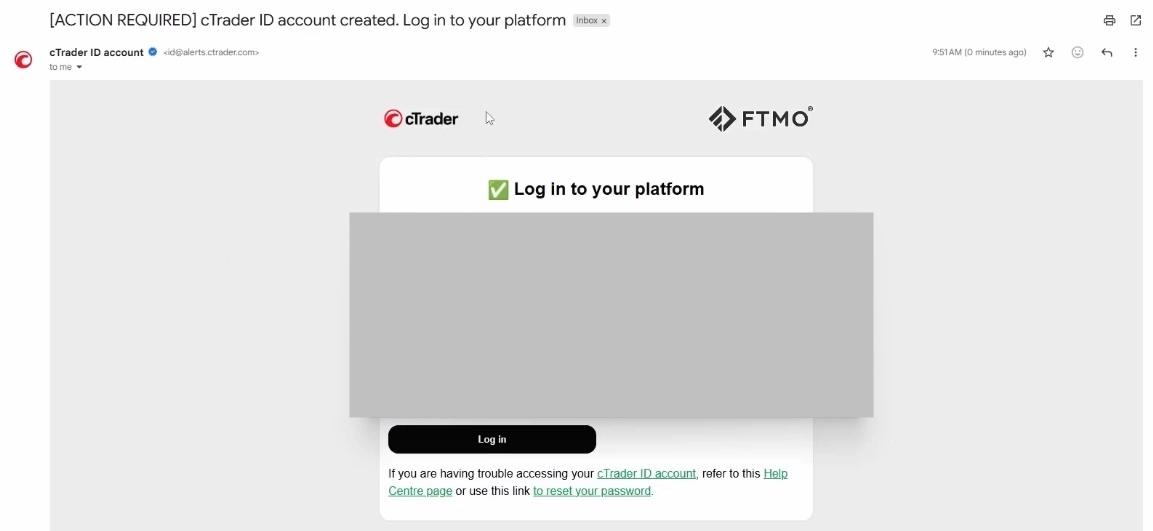
Registering with FTMO, making the payment and creating a cTrader account are very quick.
You can start trading in under an hour without a lengthy registration process.
The dashboard
FTMO's dashboard is easy to use.
The tabs are clear, statistics are kept together, and you can monitor your account without hunting for information.
That makes a real difference, especially when you want to track risk carefully.
cTrader
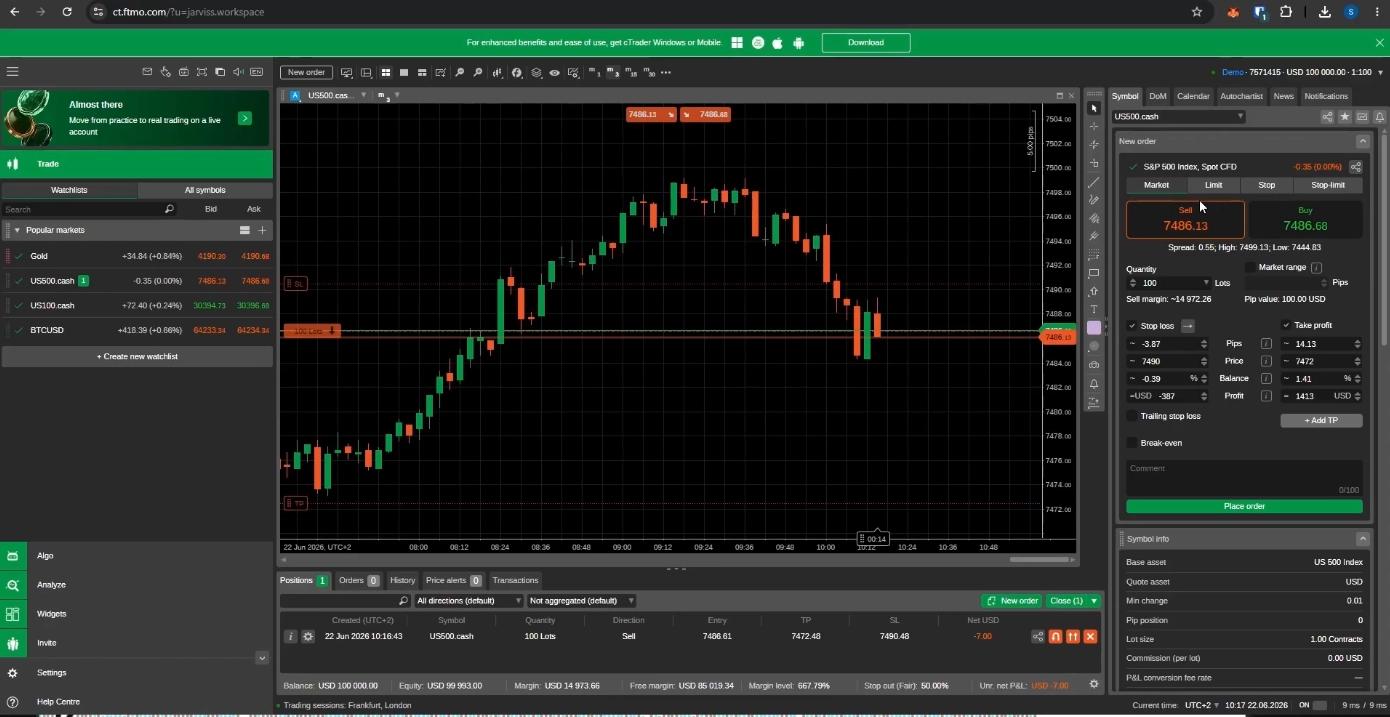
I tested FTMO with cTrader and was impressed with the platform.
It is easy to get started, the TP/SL calculator is useful, PnL is clearly displayed, and orders are easy to modify.
Built-in trader analytics
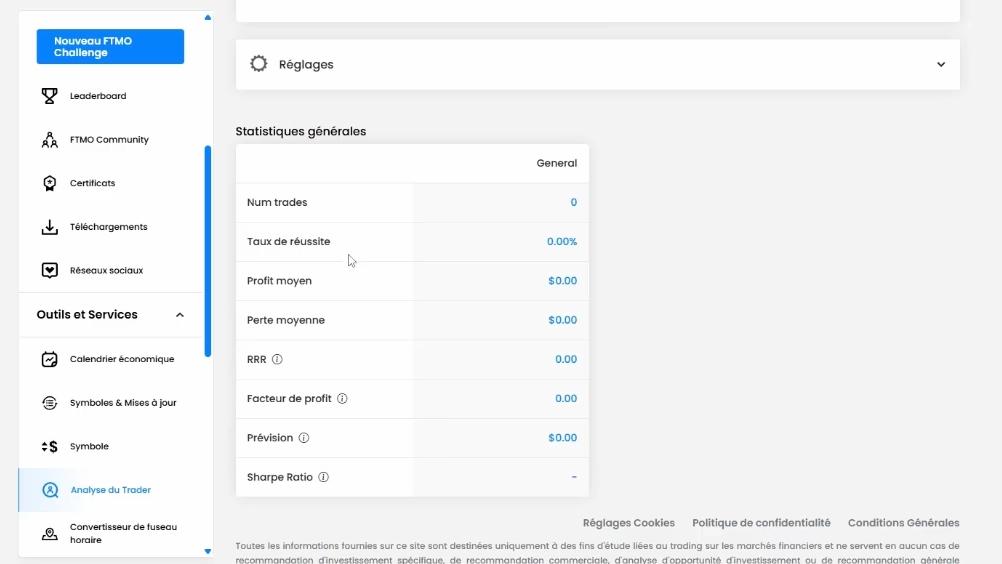
FTMO includes trader analytics directly in the account dashboard.
You can see your win rate, average profit, average loss, risk/reward ratio, profit factor and Sharpe ratio.
These figures show you what's actually happening in your account and make it easier to see what needs fixing.
3) Disadvantages
Maximum daily loss
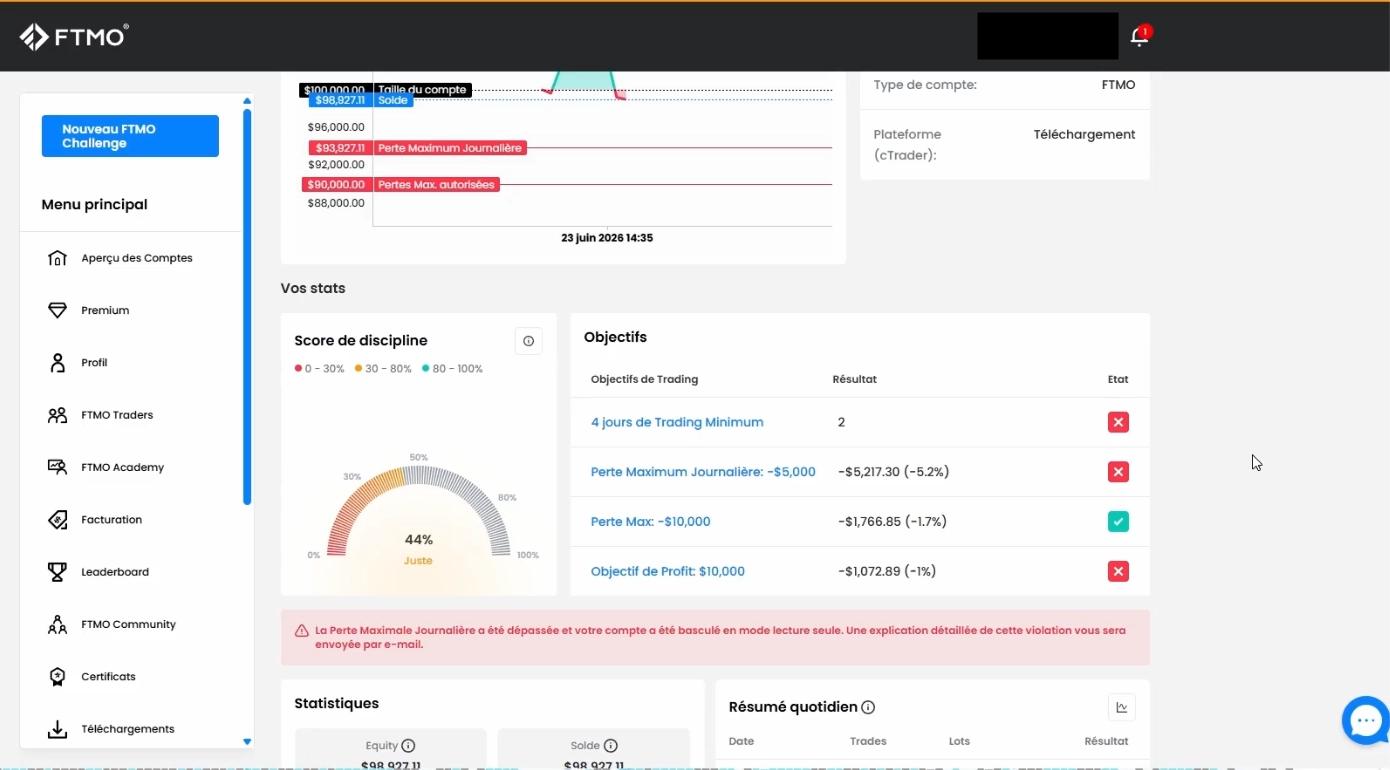
At FTMO, hitting the maximum daily loss fails the challenge.
At some Futures prop firms, reaching this limit may simply block trading for the rest of the day without losing the account.
FTMO is stricter.
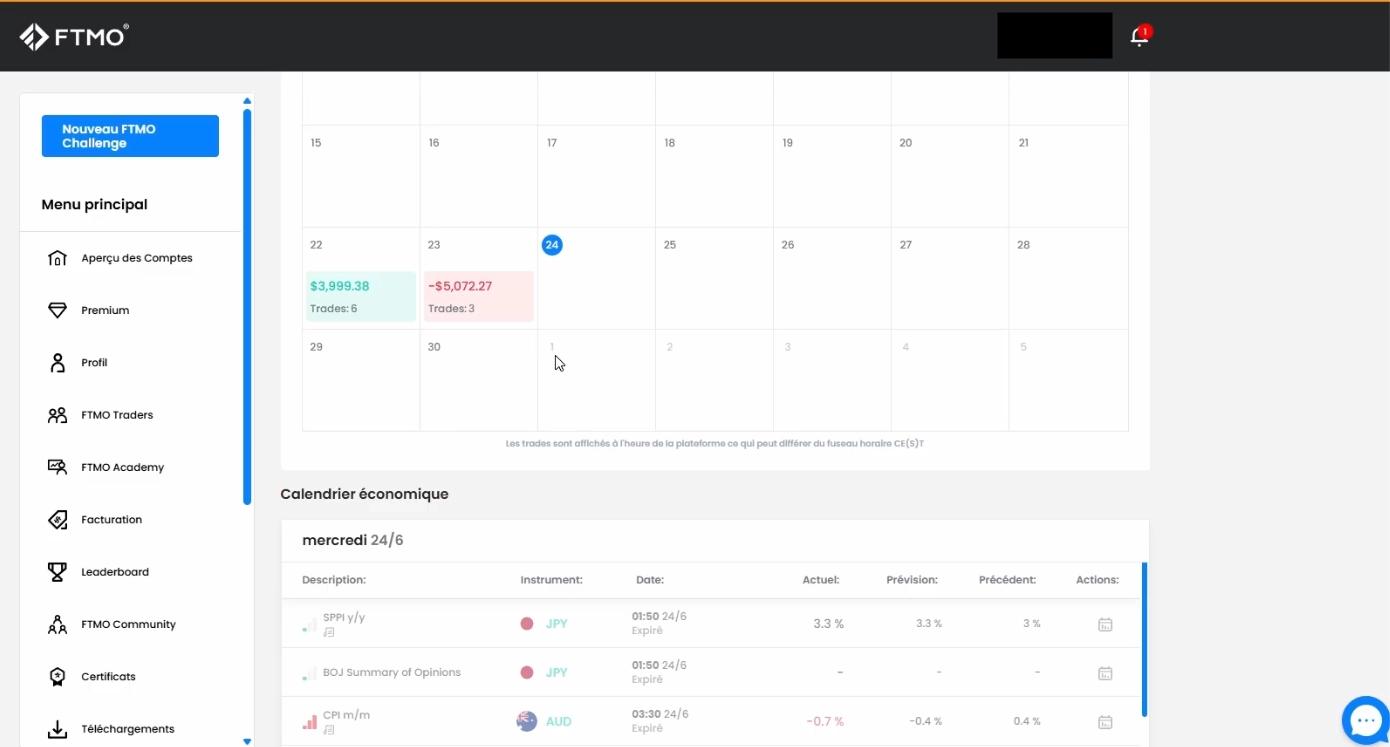
That's what happened to me when I tested FTMO. I was used to futures prop firm rules, so I didn't expect to lose the challenge over this.
It was entirely my fault for not reading the rule properly. But the most frustrating part was that I still had room before hitting the overall maximum loss limit.
Standard accounts prohibit news trading
You cannot trade the news on the Standard account option.
The restriction applies from two minutes before until two minutes after the relevant economic announcement.
If your stop-loss or take-profit is triggered during that window, it can fail the challenge.
Price
FTMO is expensive for a CFD prop firm, and even more so compared with Futures firms.
A $100,000 account costs around €400 during a promotion, making failed attempts costly.
One-step challenges are less attractive
The one-step challenge rules resemble those of some Futures prop firms, but at a much higher price.
That makes the format less compelling, especially compared with firms specialising in Futures.
Spreads and commissions
CFD spreads and commissions are high.
If you're used to trading futures like me, you'll really notice the difference on some instruments.
The spread on US Oil really caught me off guard, for example.
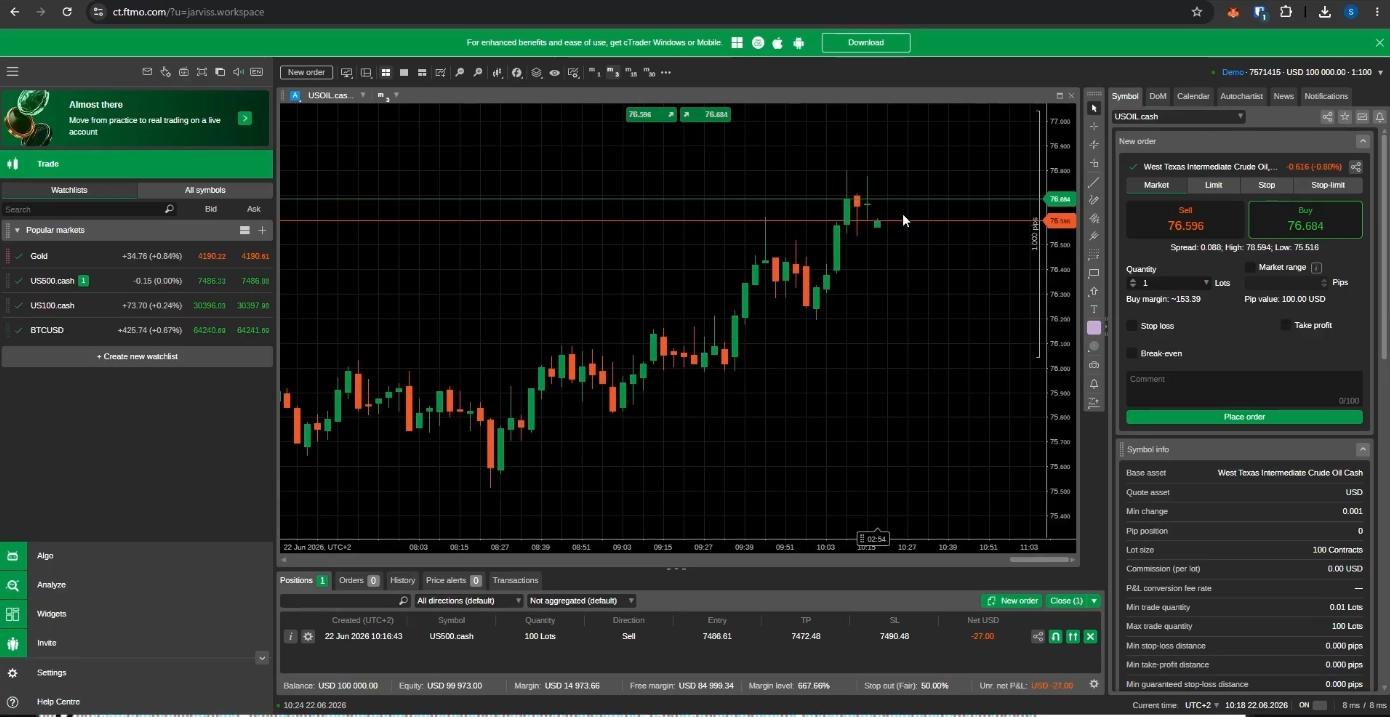
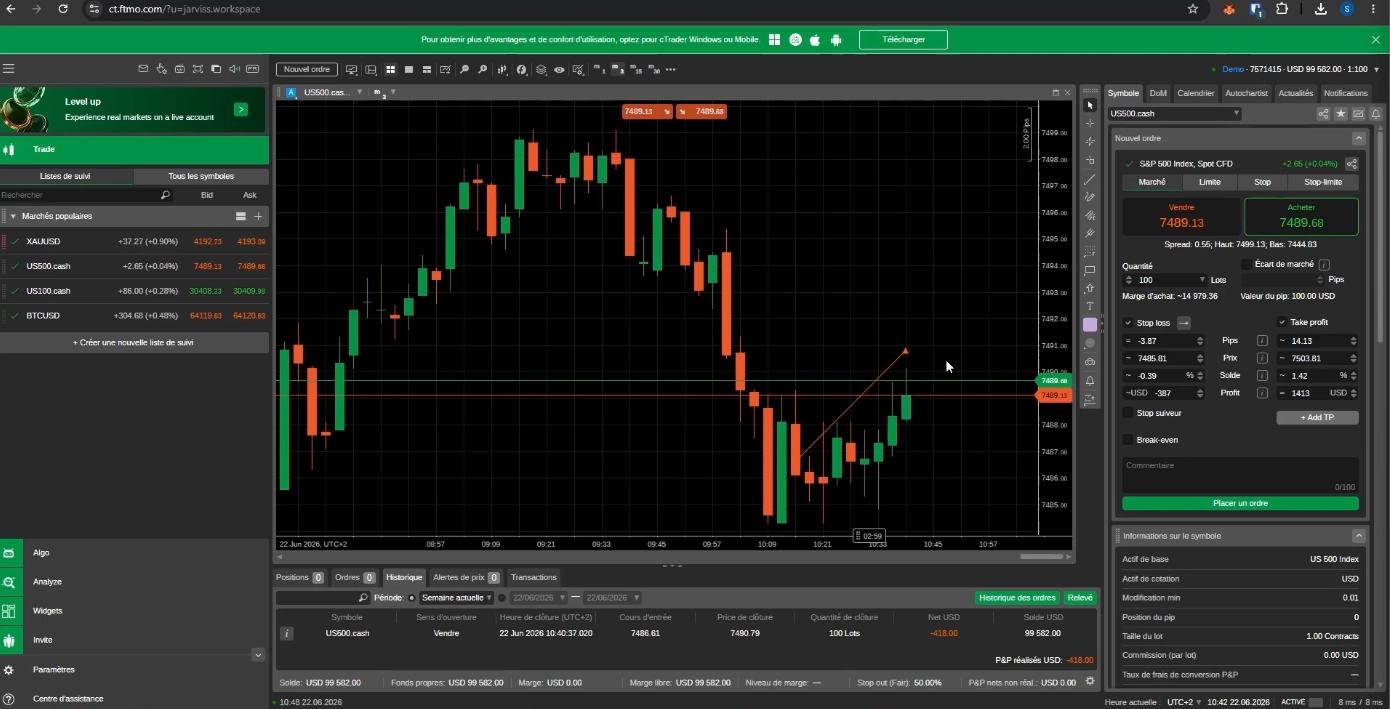
On one trade, the spread triggered my stop-loss on US500.
You can clearly see the gap between my actual position and the level reached because of the spread.
I was also surprised by the high Bitcoin commissions, even though the spreads were fairly low.
4) My recommendation
I mainly recommend FTMO's two-step challenges, because they make the most of what CFD prop firms offer.
If you want a one-step challenge, I think you're better off looking at futures prop firms such as Apex Trader Funding, Topstep or Lucid Trading.
The upfront cost often makes more sense for that kind of challenge.
The choice between Standard and Swing depends on your trading style:
- Standard is better suited to intraday trading
- Swing is more suitable if you want to hold overnight positions or trade the news
For the platform, cTrader is a very good choice.
It is easy to learn, the tools are practical, and order execution is smooth.
For account size, I'd recommend going larger, with at least $50,000, especially for a two-step challenge.
The aim is not to take large risks to pass quickly.
Think long term, be willing to aim for small gains, limit your losses and stay disciplined with your risk.
That's exactly the opposite of what I did in my tests.
The main appeal of a CFD prop firm is having an account large enough for monthly gains of 2% to 3% to produce worthwhile payouts.
By contrast, I find smaller FTMO accounts less suitable if your goal is to make a living from trading.
They can be useful for practice, testing the platform or working on trading psychology, but their financial potential is quickly limited.

