

The link between politics and finance showed itself again this week.
This time, France is on the receiving end.
France says no to Bayrou?
As I explained in a previous newsletter, Prime Minister François Bayrou called a confidence vote for 8 September.
He wanted parliamentary backing for his spending-cut plan.
No surprise in the result: 194 votes for, 364 against.
He lost the vote.
President Emmanuel Macron then appointed Sébastien Lecornu as prime minister. He now has to form a government.
Markets had already anticipated this scenario, so the announcement had no real immediate impact.
The declines linked to political uncertainty had been priced in weeks earlier.
A direct consequence of the vote
You might remember that in May, Moody’s downgraded the United States.
This time, Fitch did the same to France, on Friday 12 September.
Why?
The report is long, but the main points are:
- A budget deficit of around 5% of GDP
- Persistently high debt
- Political uncertainty weighing heavily on the outlook
Together, these reinforce the picture of a fragile situation in France...
OK Bobby, but what does that actually mean?
The likely consequences
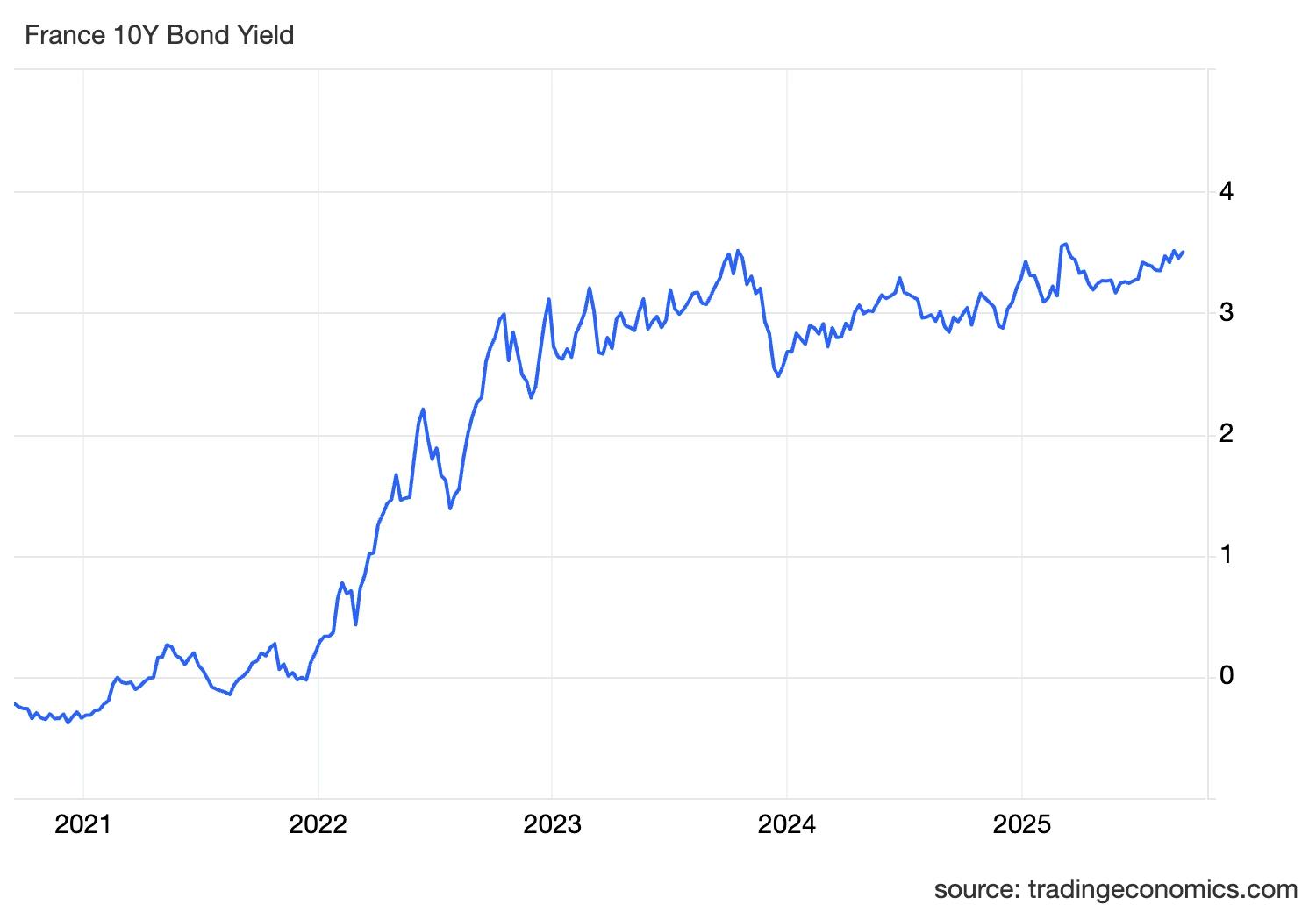
The first visible consequence is a rise in the French 10-year OAT yield.
As I explained here, rising bond yields reflect higher perceived risk among investors.
You won’t notice much difference in everyday life just yet.
But banks and investors may feel a bigger impact, because when OAT yields rise, so does the long-term cost of money.
Banks need to raise their rates to maintain their margins.
In other words, new loans could become more expensive, and borrowing capacity could fall.
Can you see the self-reinforcing downward spiral coming?
What next?
I think France’s economic and political uncertainty is likely to last.
The budget question won’t be settled quickly.
By the time the government is formed, bills are proposed and voted through, if they ever are, we could be looking at a long period of instability.
Now let’s move to something that affects France and the rest of the world.
The next FOMC meeting
On 16 and 17 September, we’ll find out whether the US central bank, the Fed, will cut its policy rates.
Markets already seem to expect it.
How can I tell?
Almost every market is in the green, including crypto.
The surprising thing is that US inflation has picked up again, reaching 2.9% in August according to the latest CPI report.
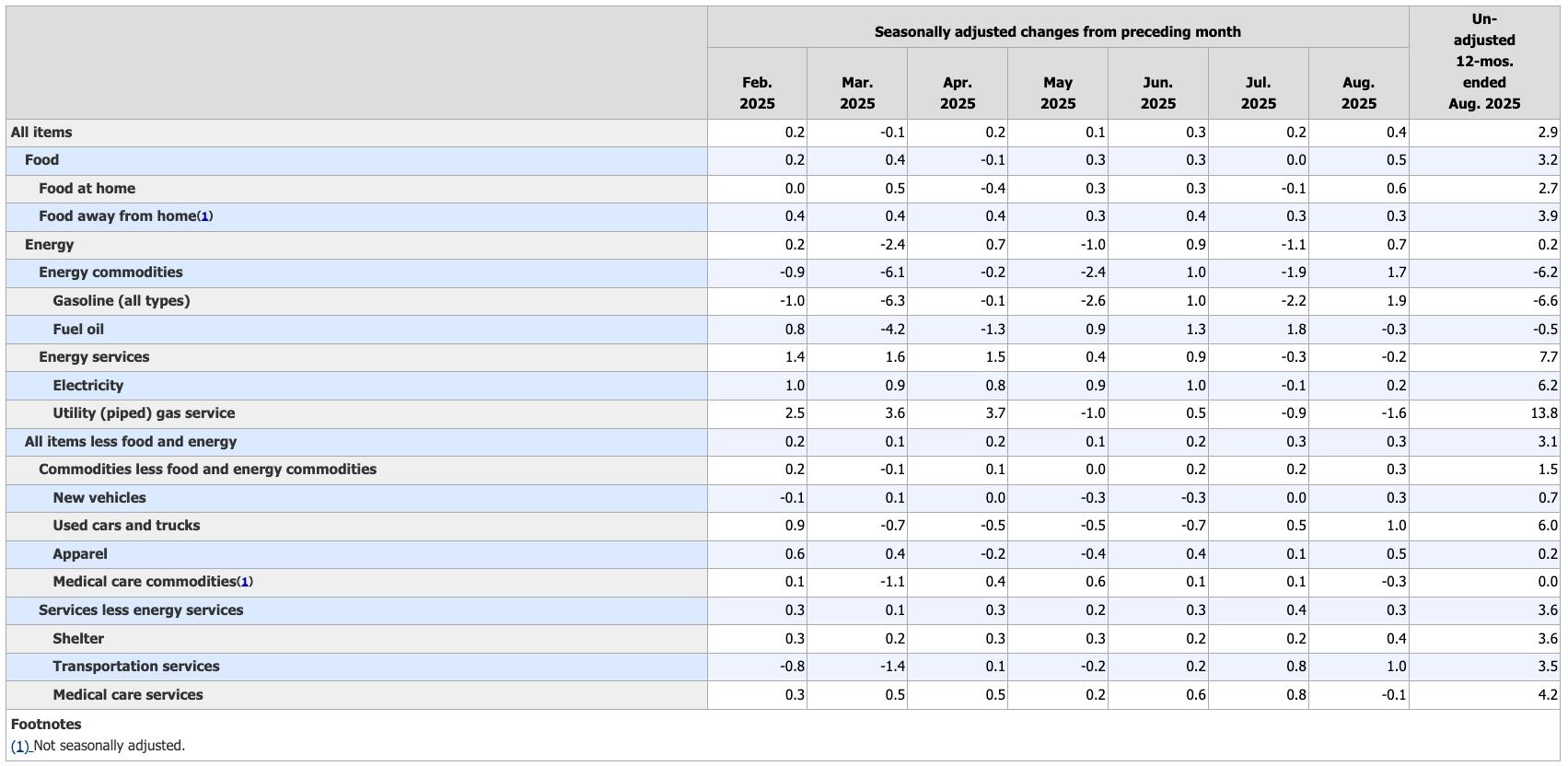
That’s closer to 3% than the Fed’s 2% target.
Yet expectations still point towards a rate cut.
How do we explain that?
After doing some research, I found that the debate mainly centres on employment and economic activity.
The Fed fears that rates that are "too high" will weigh too heavily on growth and jobs.
With good reason: the US labour market is already showing signs of weakness:
Job creation almost stalled in August, official employment figures were revised down, and unemployment claims remain close to a four-year high.
The argument is simple: lower rates make borrowing cheaper for businesses, making it easier to invest and start hiring again.
Sources: Trading Economics, The role of the FOMC