
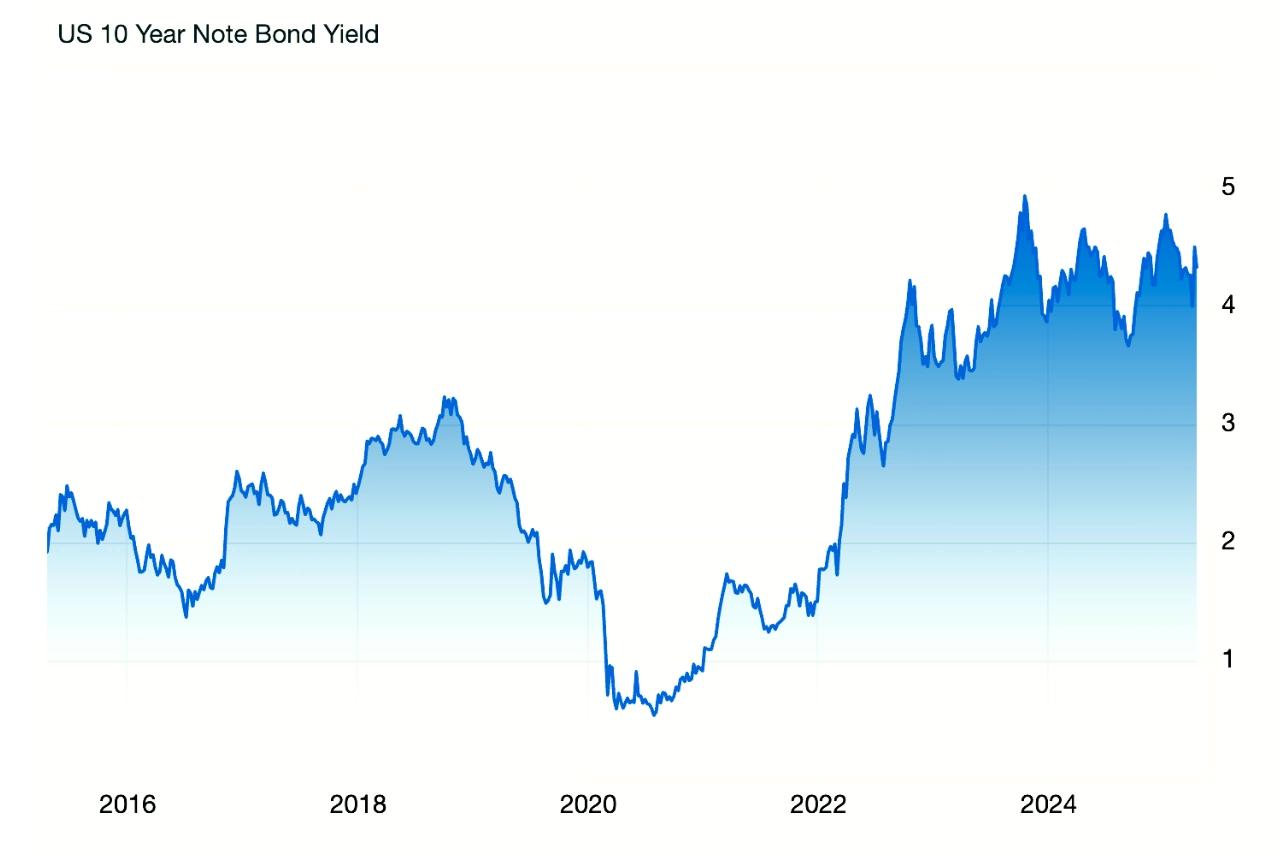
The US 10-year government bond yield is at 4.35%. That’s high enough to cause concern and get people talking.
Let me explain why it’s risen and what it means.
First, what is a government bond?
A government bond is a loan you make to a government.
In return, it promises to repay you later, with interest.
- In France, we have obligations assimilables du Trésor, or OATs
- In the United States, the equivalent is called a Treasury Bond (T-Bond)
The 10-year Treasury yield is the return investors receive for lending money to the United States for ten years.
Why is the yield high?
Several factors explain the rise.
Donald Trump’s new import tariffs increase costs for businesses, which feed through to consumer prices.
Inflation could therefore start rising again. It’s already at 2.4%, above the Fed’s target.
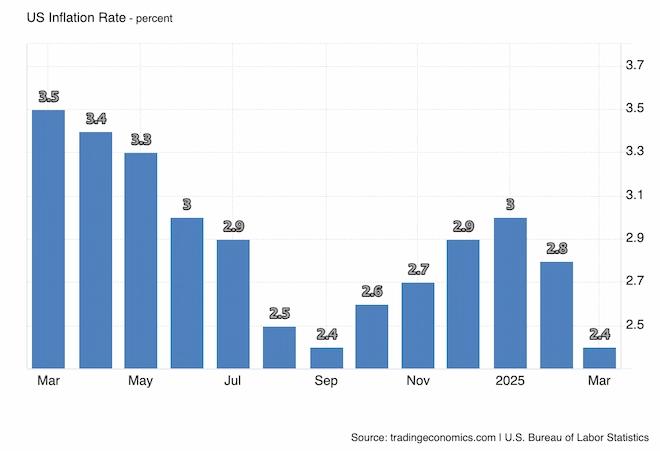
To stop it climbing further, the Fed could keep rates high.
Meanwhile, the US deficit keeps growing, and the government is issuing a lot of debt to fund its spending.
The more bonds there are on the market, the more attractive the yield needs to be to bring investors in.
Against that backdrop, investors demand higher returns to lend over the long term, especially if inflation stays above 2%.
All of this pushes 10-year Treasury yields higher.
But why do so many people care about this particular yield?
Because it influences borrowing costs and investment decisions around the world, not just in the United States.
Is a high yield a good thing?
In finance, a high return often comes with a higher perceived risk.
The point isn’t to label it good or bad, but to understand what it implies.
When a government bond, especially a US one, offers such a high yield, it signals that the country is seen as less stable or less reliable over the long term.
Some investors view US debt as less predictable, and therefore riskier.
That creates an atmosphere of distrust, even though the United States remains a market benchmark.
How higher yields affect the United States
When the 10-year yield rises, mortgages and business loans become more expensive too.
Households don’t pay this rate directly, but banks use it as a benchmark.
As a result, consumer spending slows. So does investment.
And so does growth.
That puts the Fed in a difficult position: keep rates high to control inflation, or cut them to prevent the economy slowing too sharply.