

On 2 April 2025, the famous "Liberation Day", Donald Trump announced a new round of import tariffs.
With the global economy already under pressure, this latest announcement triggered an immediate reaction in financial markets.
Here’s what you need to know.
More and more tariffs
Back in the White House, Donald Trump set himself a clear goal: reduce the US trade deficit.
I explained the wider economic context and his motives in this newsletter.
At first, Trump opted for targeted tariff increases.
Even those limited measures were already weighing on markets.
But on 2 April, he stepped things up: the United States now imposes a minimum 10% tariff on all imports.
In practice, some countries face much higher rates.
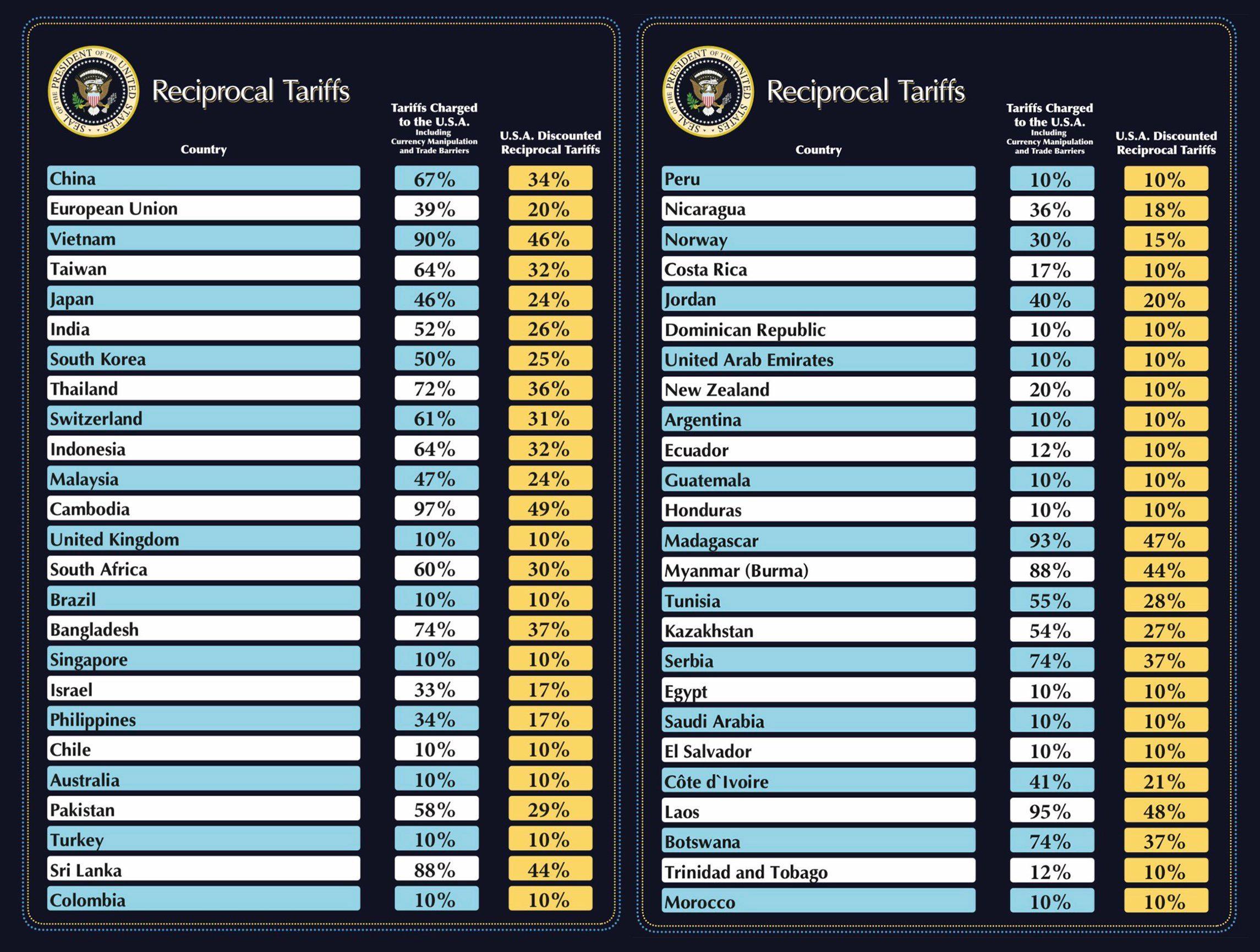
The Trump administration uses several criteria to set import tariffs:
- Taxes imposed on American products
- Practices it considers "unfair", such as exchange-rate manipulation
- The trade deficit between the country and the United States
In other words, the more a country exports to the US without importing in return, the more likely it is to be targeted.
A few examples:
- European products face a 30% tariff
- China taxes US products at 67% and gets 34% in return
- Bangladesh imposes trade barriers of around 74% and receives a US tariff of 37%
The takeaway: there’s no fixed scale. Each country is treated individually.
And because countries don’t respond immediately, the effects will play out over time.
Some have already reacted. Others are still waiting.
The European Union, for example, is considering 25% countermeasures on several US products (source: Reuters).
What happens next depends on each country’s response and future negotiations.
The impact on financial markets
Traditional markets
Stock markets, particularly in the US, were already falling after Trump’s first tariff announcements.
2 April changed everything.
The S&P 500 lost almost 10% over the week, its largest weekly decline since the start of the year.
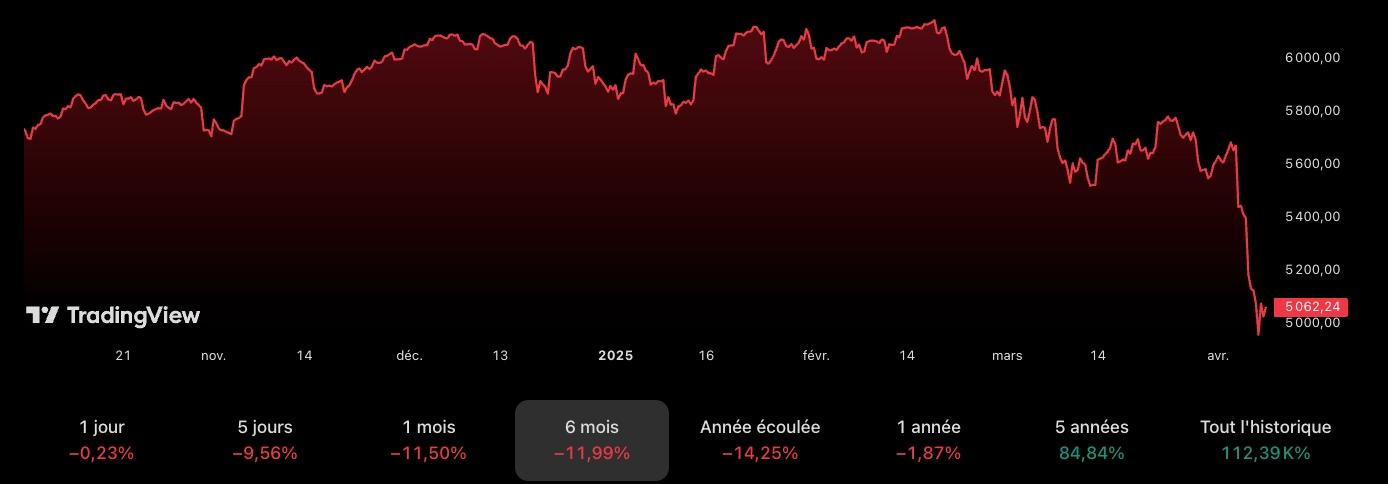
The Nasdaq and Dow Jones are following the same trend.
But tariffs aren’t the only reason for the decline.
Other factors combine to have a direct impact:
- Fed rates remain high
- Rising bond yields encourage investors to shift towards less risky investments
- The geopolitical backdrop is still unstable
- Trade tensions add to the overall uncertainty
Some investors are turning to assets they consider less uncertain: gold, the dollar and bonds.
Others are leaving the market altogether, preferring to wait for calmer conditions.
Crypto
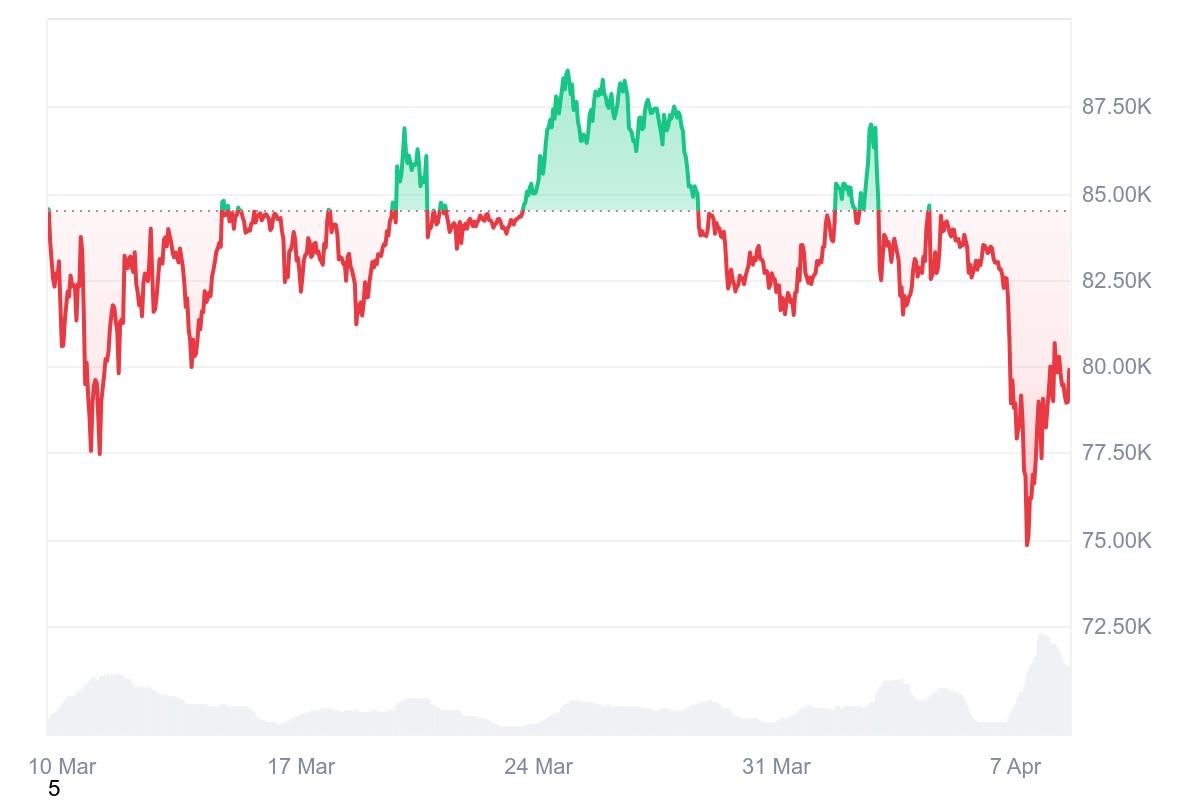
Although the new tariffs don’t directly target crypto, it’s also suffering from the broader loss of confidence.
Crypto held up until 4 April. The breakdown happened over the past few days.
Some are selling cautiously to limit risk. Others have been liquidated.
The pressure is real.
For now, we’re calling it a correction, not a panic.
Although...
Given the headlines and the visible price falls, the fear is understandable.
Bitcoin fell 5.5% on 7 April, hitting its lowest level of the year at around $77,000.
Ethereum was hit harder, losing nearly 20% in a few days.
My personal view?
When prices fall, those who don’t panic tend to fare better.
To be continued...
Sources:
- CoinMarketCap
- Cover image: Sky News
- TradingView