A stop loss is a trading order that triggers an exit from your position when the market reaches or crosses a price you've chosen.
- When you buy (a long position), your stop goes below your entry price. If the price falls to that level, the stop triggers a sell order.
- When you sell short (a short position), your stop goes above your entry price. If the price rises to that level, the stop triggers a buy order to close the position.
For the same position size, the farther your stop is from your entry, the more you lose if your exit order fills at the stop price.
Depending on your trading platform, you may see “SL” for stop loss and “TP” for take profit (the order that takes your profit when the price reaches your target).
How do you choose your stop price?
Your stop price depends on your strategy. I use order flow.
I use the volume profile to find the prices where a lot of contracts have traded. At those prices, I watch how buyers and sellers respond.
- If selling picks up but buyers hold the level, I might go long with a stop below it.
- If buying picks up but the price can't move higher, I might go short with a stop above the level sellers are holding.
I'll use TradingView to show you two examples on a 15-minute MNQ chart, one long and one short.
Going long
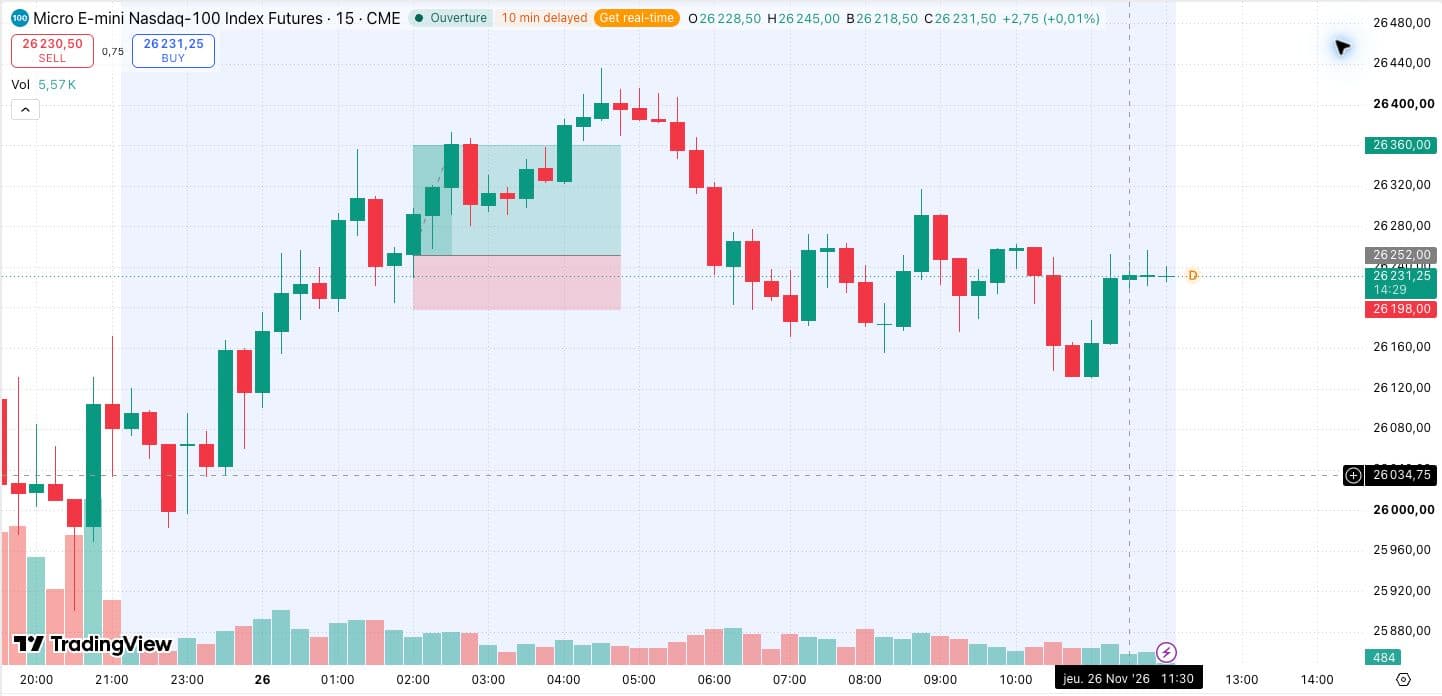
On the MNQ chart, I marked a long entry at 26,252 points, with a target of 26,360.
My stop is below my entry at 26,198. If the price falls back to that level, the stop triggers a sell order.
Going short
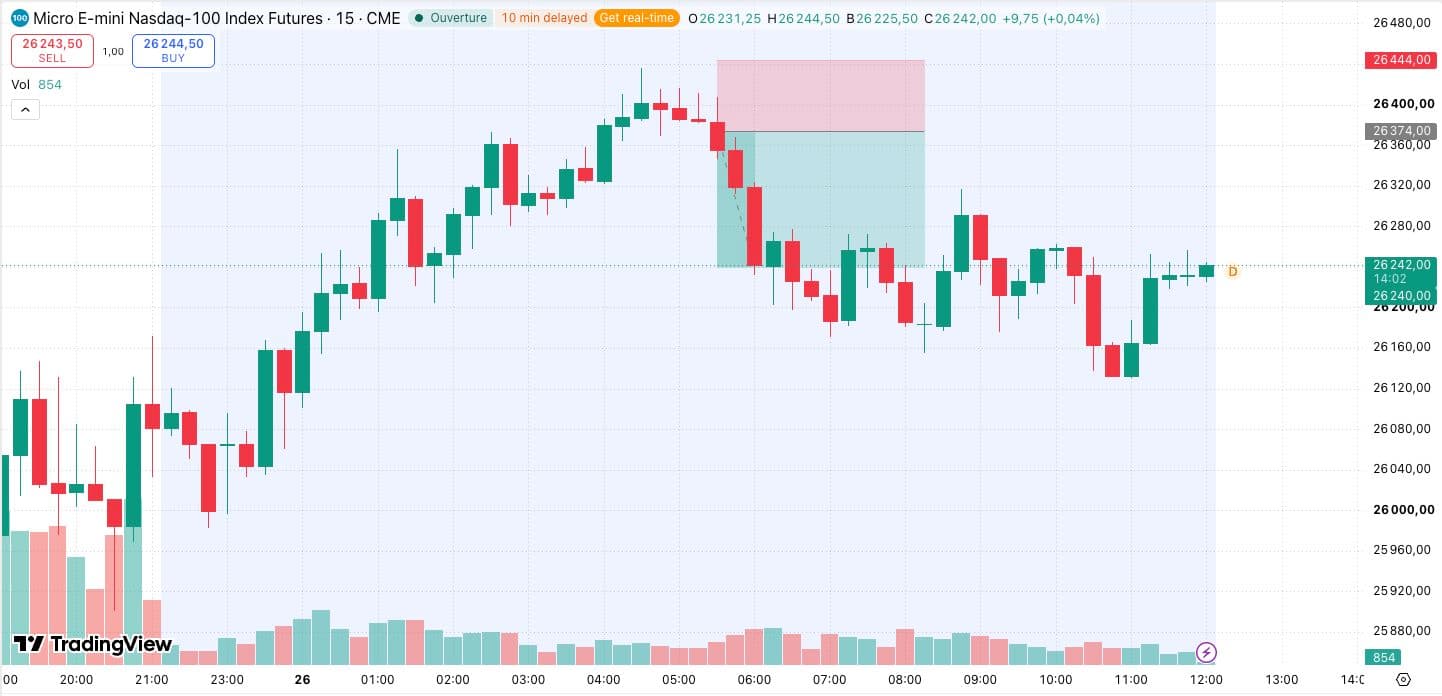
Later in the session, as the price started to fall, I marked a short entry at 26,374 points, with a target of 26,240.
If the price climbs back to 26,444 points, my stop triggers a buy order to close the short.