
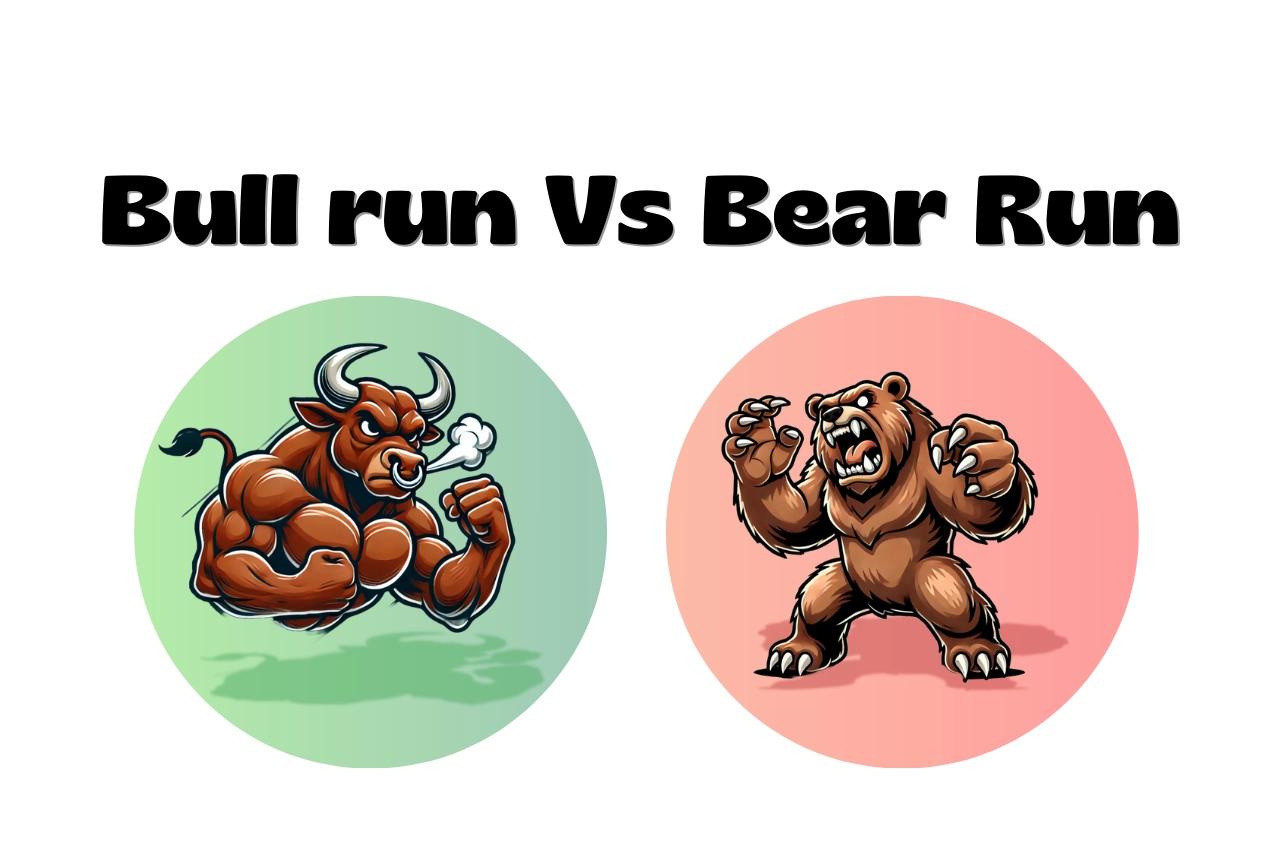
What is a bull run?
A bull run is a prolonged period of rising asset prices in financial markets, including stocks and cryptocurrencies.
The term comes from the image of a bull.
When a bull attacks, it thrusts its head upwards, symbolising a sustained rise in prices.
For example, between March 2020 and the end of 2021, stocks surged after the Covid-related market crash.
The S&P 500 and Nasdaq kept hitting new records, supported by stimulus packages and very low interest rates.
In crypto, Bitcoin passed $69,000 in November 2021.
What about a bear market?
A bear market is the opposite: a prolonged period of falling asset prices in financial markets.
This time, the image is a bear.
When it attacks, it swipes downwards, symbolising a lasting fall in prices.
The subprime mortgage crisis between 2007 and 2009 is a good example.
Markets fell sharply, and the S&P 500 lost around 50% of its value in a year and a half.
Why do these trends develop?
These market movements aren't random.
They're often linked to economic factors such as:
- Decisions by central banks, such as the Fed
- Economic measures introduced by countries, such as major tariffs
- Major events, crises or wars, such as the war in Ukraine
In crypto, Bitcoin's halving is a classic trigger for a bull run.
When it happens, miners receive fewer bitcoins, reducing supply.
Combined with investor enthusiasm, this scarcity often pushes prices higher and creates a snowball effect.
The psychology of markets
Investors' mindsets play a huge role in these trends.
When they're optimistic, they buy, pushing prices up.
When they panic, they sell in large numbers, accelerating the fall.
These cycles repeat.
A rising market attracts more and more buyers until it reaches a breaking point.
In a falling market, one wave of selling follows another. But after enough of a decline, there comes a point when most sellers have already liquidated their positions.
Selling pressure eases, and the market eventually stabilises.
Market cycles
As I said, markets move in cycles.
There are distinct phases that come around again and again:
- Accumulation: after a sharp fall, some investors gradually start buying again. The market remains uncertain, but the first signs of recovery appear
- Expansion, or the bull run: prices rise, enthusiasm grows, the media starts covering it and more investors enter the market
- Distribution: early buyers start selling to lock in profits. The market slows down and the first signs of a reversal appear
- Correction, or the bear market: confidence collapses and prices fall quickly. Everyone panics and sells until the market finds a new level of stability
These cycles can last several months or even years.
Is there something in between?
Yes. A market doesn't always move clearly up or down.
When prices move sideways without a clear trend, we call it a consolidating or ranging market.
If it becomes unpredictable, with sharp, rapid swings and no clear direction, we call it a choppy market.
What do bullish and bearish mean?
- Bullish means you're optimistic or confident about something. That could be a stock, a market, a project or even something unrelated to finance
- Bearish means the opposite: you're pessimistic or expect a negative development
