

Every time Donald Trump speaks these days, I cross my fingers that he won’t say something that sends us back to April.
For now, we’re moving in the right direction, with the occasional reversal...
This week’s crypto highlights
Coinbase
I didn’t mention it in my previous newsletter, but on Monday 19 May, the Coinbase exchange joined the S&P 500.
A crypto company making it into the index shows how the sector is gradually establishing itself in traditional finance.
Contrary to what people sometimes think, a large revenue figure alone isn’t enough to get in.
The criteria are stricter, as detailed in S&P Dow Jones Indices’ official methodology:
- A market capitalisation of at least $20.5 billion
- Positive earnings over the last four quarters
- Monthly trading volume of at least 250,000 shares over the past six months, and so on
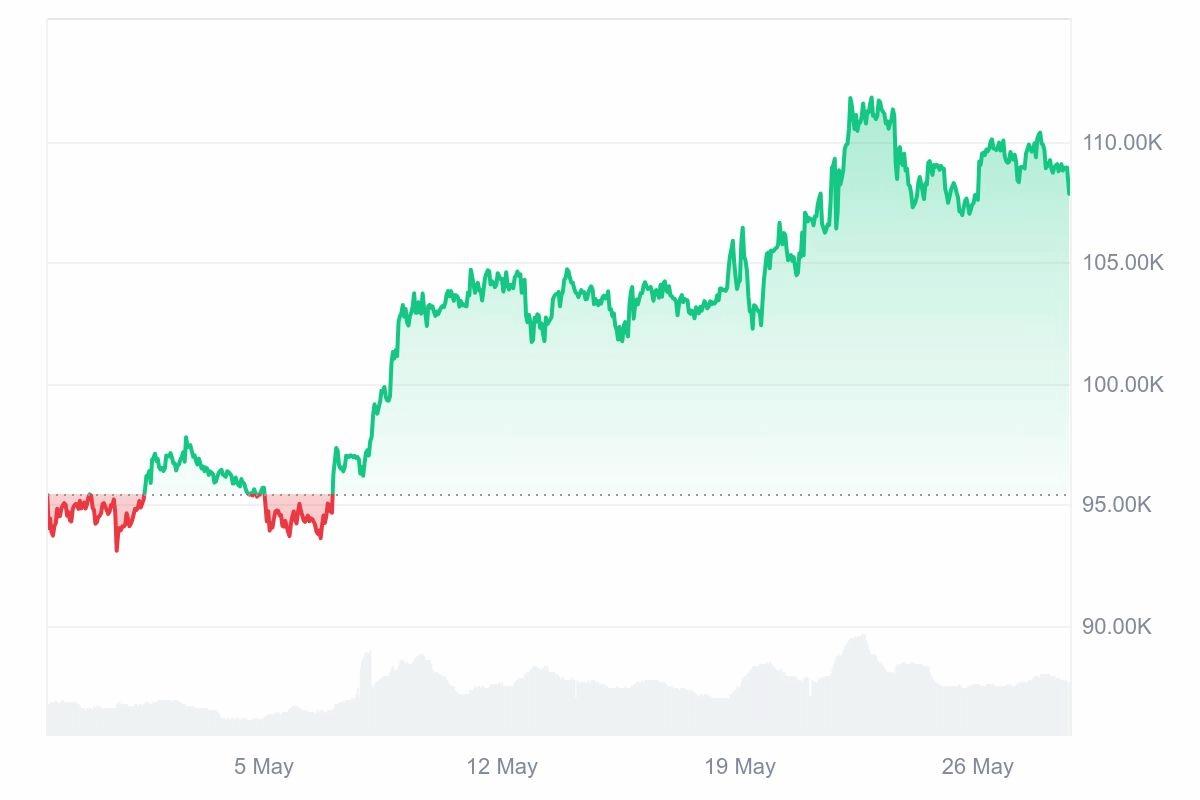
Meanwhile, Bitcoin hit a new all-time high of $111,970.17 on 22 May, driven by optimism about US regulation and growing institutional interest.
A Bitcoin reserve
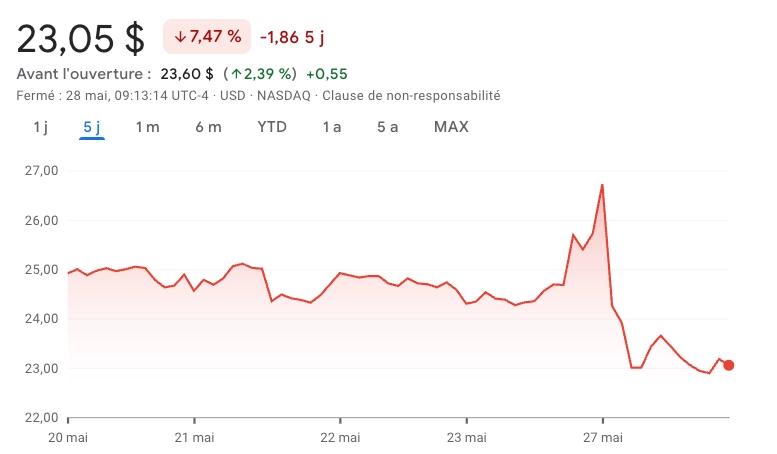
Yesterday, Tuesday 27 May, Trump Media & Technology Group, led by Donald Trump, announced plans to raise around $2.5 billion to invest in Bitcoin.
Without getting into the details, the deal involves $1.5 billion in equity and $1 billion in convertible bonds.
Although it sounds positive for crypto, the announcement had no visible effect on the market.
It reminds me of when Trump tweeted:
Of course, BTC and ETH, along with other cryptocurrencies, will be at the heart of the reserve. I love Bitcoin and Ethereum too.
At its core, this is still vague talk that builds expectations without concrete action behind it.
And Trump Media & Technology Group’s investors didn’t like it: the stock has lost almost 10% since the announcement.
An update on tariff negotiations
On Friday 23 May, Trump announced plans to impose 50% tariffs on imports from the European Union from 1 June.
He accused the EU of dragging out trade negotiations.
European markets briefly reacted badly to the initial announcement, as we saw in the CAC 40.
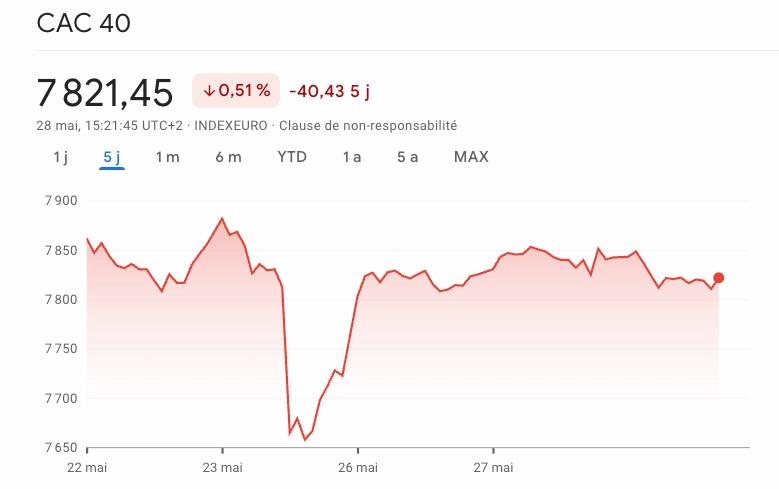
Two days later, after speaking with European Commission president Ursula von der Leyen, he pushed the measure back to 9 July.
On his social network, he commented in his usual style:
I was very happy with the 50% tariff on the European Union, especially because they were dragging out the negotiations. But they called to arrange meetings quickly. That’s positive.

He wants Europe to offer the same trade openness he demanded from China.
Delaying the measure calmed things down, but uncertainty remains. Nothing has really been settled yet.