
Since we started the day with an extra hour’s sleep, I suggest we don’t waste it on a long introduction.
France’s starting lineup is doing well
The end of this week has been marked by companies releasing their quarterly earnings.
On the French side, the big groups have generally performed well: LVMH and Hermès are still leading the attack, Sanofi is keeping up the pressure, and Orange is showing real ambition on the pitch.
Apparently, the government’s budget and political problems haven’t affected them too much.
The United States: inflation and rate cuts
We’ve had the US Consumer Price Index release.
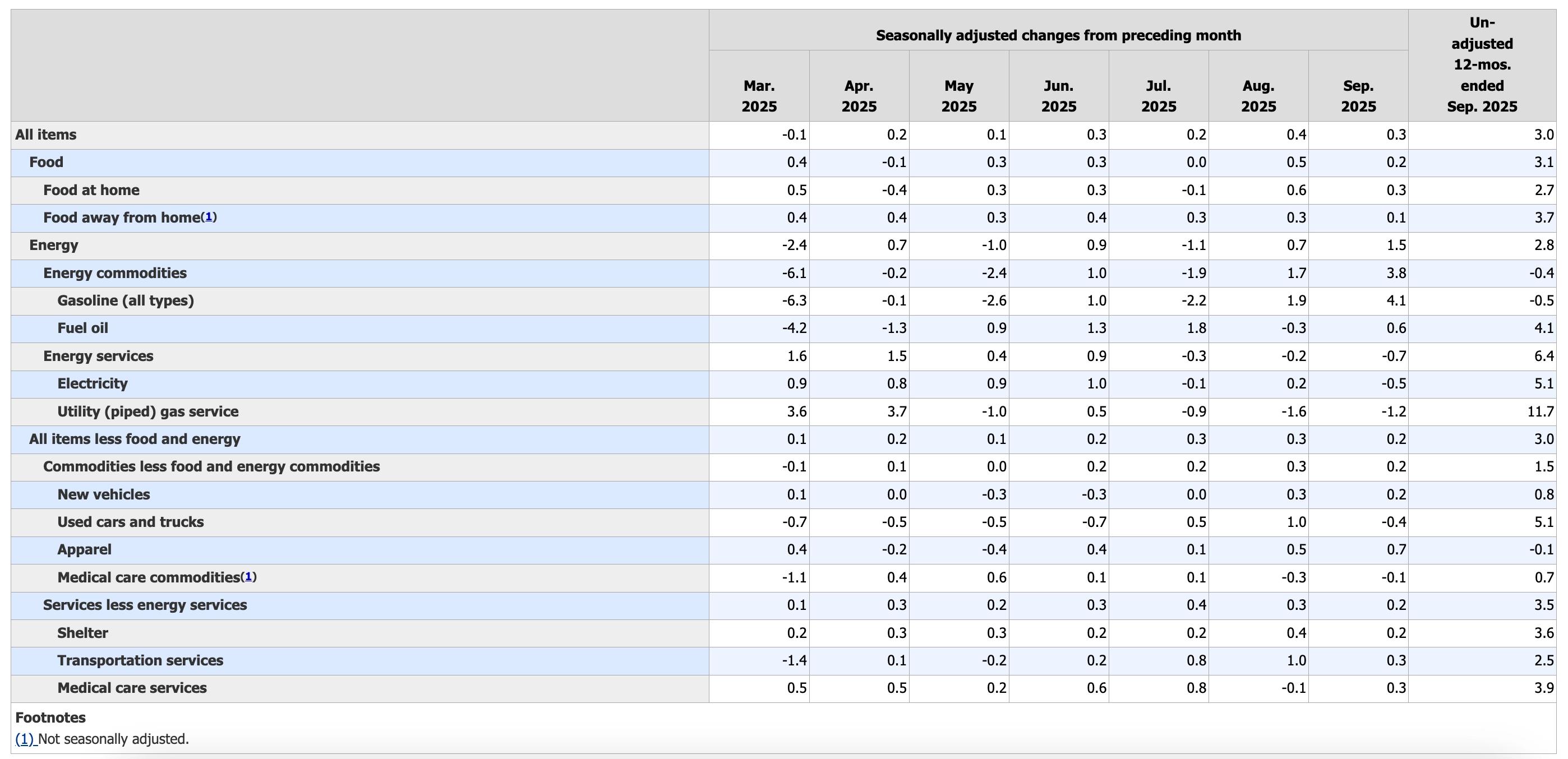
The figures show prices are still rising, up 0.3% in September versus 0.4% in August, but a little more slowly than expected.
Good timing: the next FOMC meeting, the committee that sets the Fed’s rates, takes place on 28 and 29 October.
The news that inflation is still rising doesn’t seem to have changed the Fed’s plans. It still intends to cut rates.
A reminder: policy rates currently stand at 4.25% for the Fed and 2.15% for the European Central Bank.
Russia’s interesting monetary policy
A look at Russia helps put our own situation into perspective.
If you think borrowing is expensive here, over there it’s very, very, very expensive.
What do you think the Central Bank of Russia’s policy rate is?
Take a couple of seconds before reading on.
OK, enough suspense: 16.5%.
Yes, you read that right. And the worst part is that they’ve just cut it by half a percentage point.
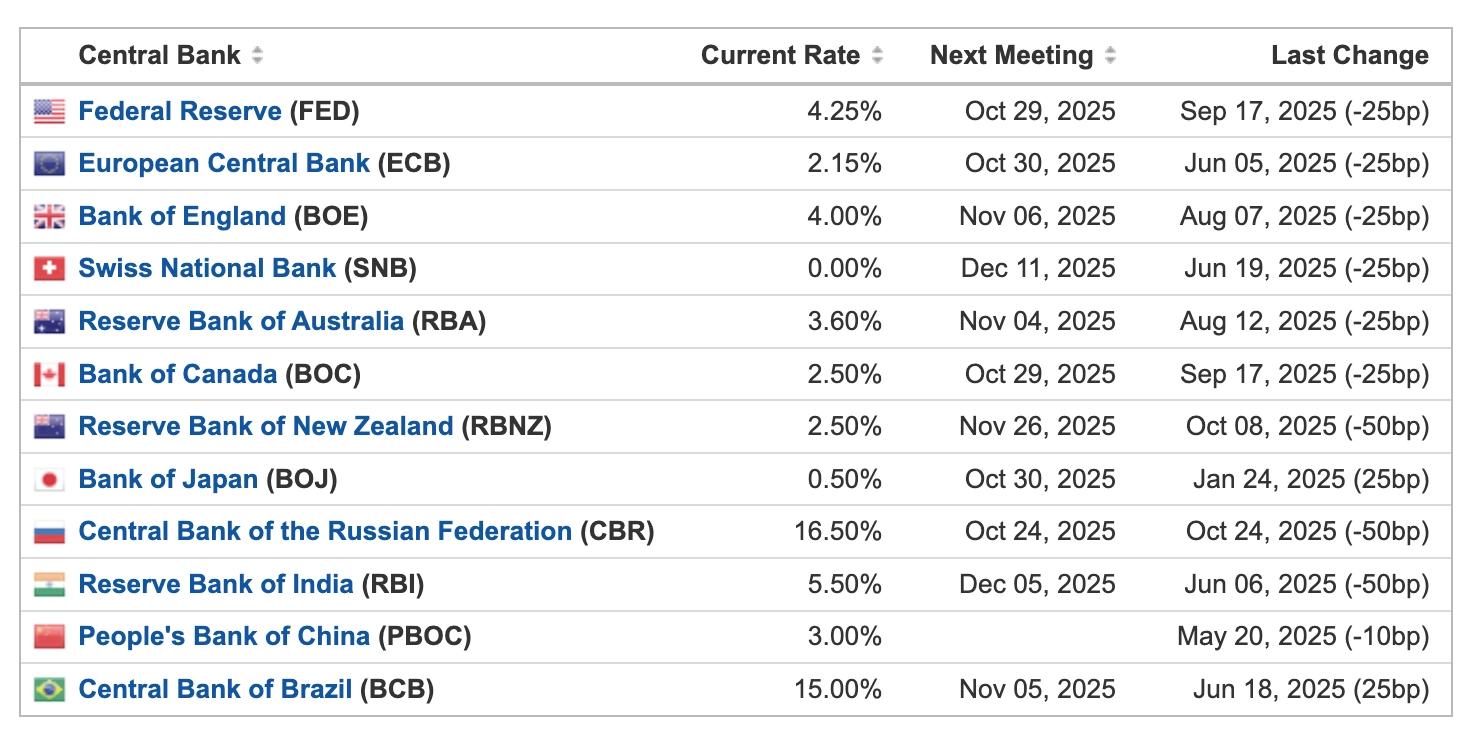
Source: Investing.com
Why such a high rate?
Several factors help explain it:
- Inflation has been above 8% for several months
- The country is at war and faces economic, financial and trade sanctions
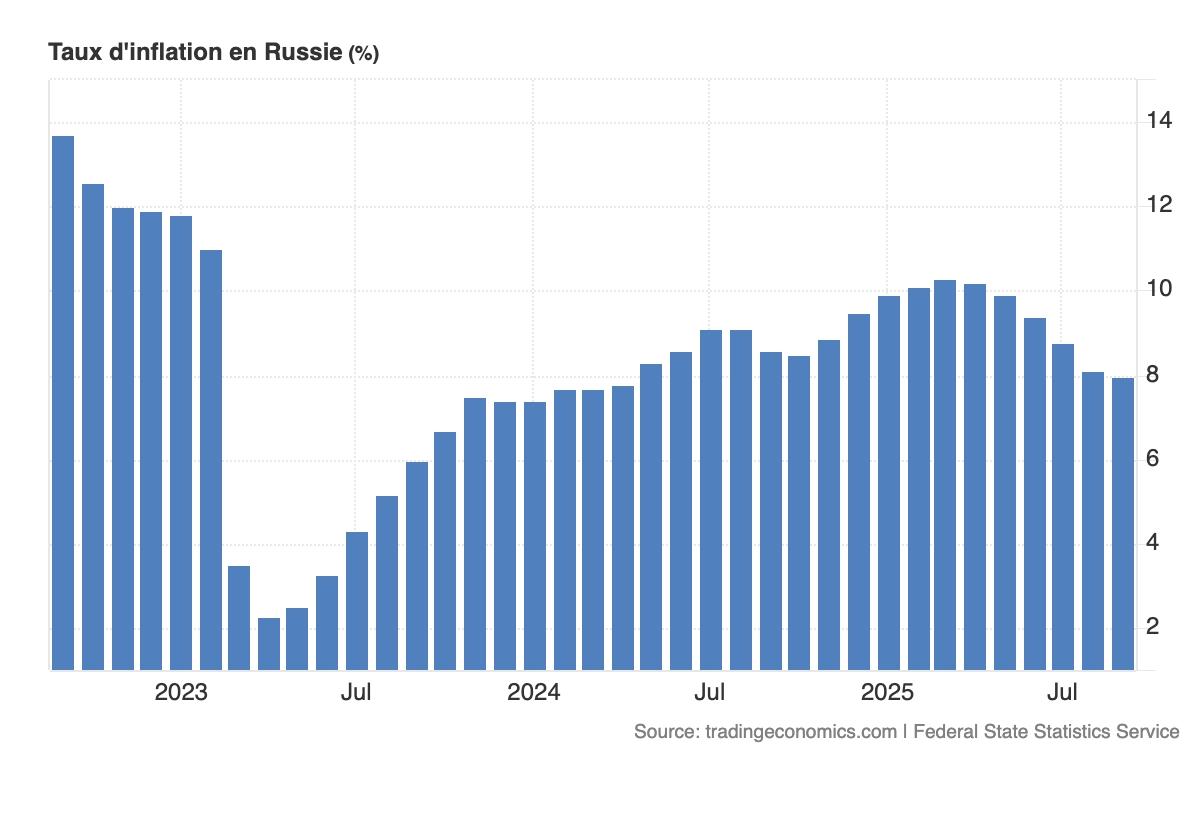
To prevent capital flight, stabilise the currency and reduce inflation, the central bank has adopted a very restrictive monetary policy.
The other important point: while borrowing is expensive, saving in roubles pays well.
Households are therefore encouraged to save rather than spend or borrow to invest.
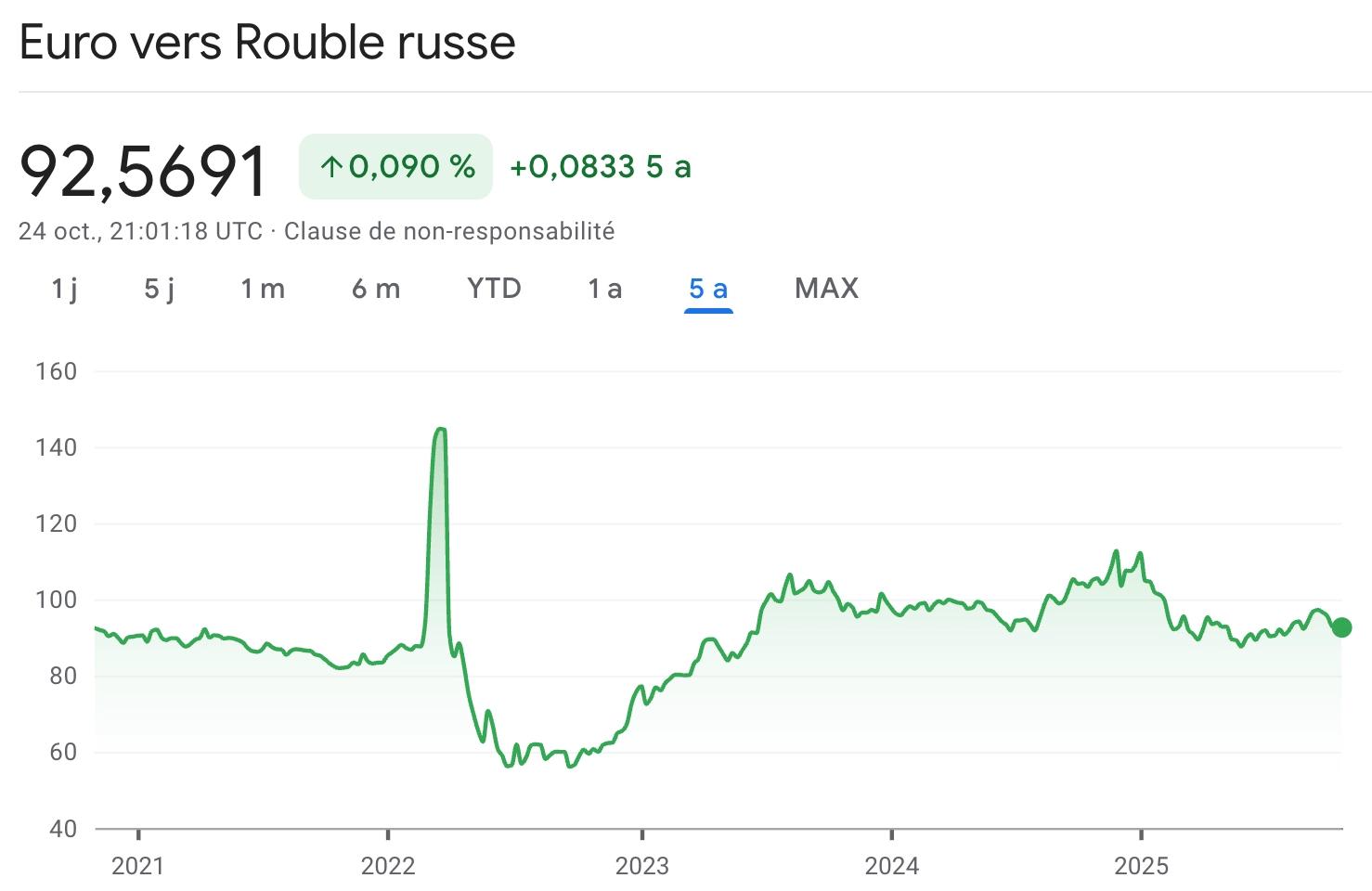
Source: Google Finance
That’s very different from Europe or the United States, where the goal is to get investment going again as soon as possible.
Russia is prioritising monetary stability, even if that temporarily slows its economy.
Different economic regions clearly have different strategies.
Some want to revive growth. Others want to contain inflation at all costs.
There isn’t one good or bad approach. It all depends on the circumstances and the priorities at the time.