

As a trader, self-appointed economist, financial analyst in my spare time, and above all a French citizen, I feel obliged to follow what’s happening in my country.
Last I’d heard, it was 6 October, and Sébastien Lecornu’s government had resigned less than 24 hours after being appointed.
In my mind, that was settled: the president would go looking for a replacement. Again.
To my surprise, no.

How the Lecornu affair played out
It was all a carefully prepared strategy.
Four days later, on 10 October, Emmanuel Macron reappointed Sébastien Lecornu as prime minister, tasked with forming a new government and handling the 2026 budget.
Why all the manoeuvring?
Before resigning, our former, and now current, prime minister had put together a ministerial team that displeased both some allies in the governing camp and the opposition.
The likely outcome was clear: a vote of no confidence, deadlock and a government unable to do anything.
To avoid that, Lecornu chose to resign, legally bringing down his own government so he could start again on a better footing.
Once reappointed, he could propose a new team after renegotiating the political balance with his allies.
Our politicians really are ingenious when there’s a deal to be made!

But all this manoeuvring is happening in difficult circumstances.
The president’s camp still doesn’t have enough seats in the National Assembly to pass laws easily.
So it can’t handle the budget however it likes.
Opposition parties even tried to take advantage by filing several no-confidence motions to bring the government down again.
None succeeded. Parties are happy to weaken an opponent, but not if that hands victory to another.
The rating agencies aren’t impressed
Against this unstable backdrop, S&P downgraded France to A+ on 17 October, citing doubts about the country’s ability to control its public finances.
Hard to blame them...
It echoes Moody’s decision on the United States a few months ago, for similar reasons: a large budget deficit and internal political tensions.
Still, take comfort: France isn’t the only country causing concern.
On 14 October, the International Monetary Fund released its World Economic Outlook.
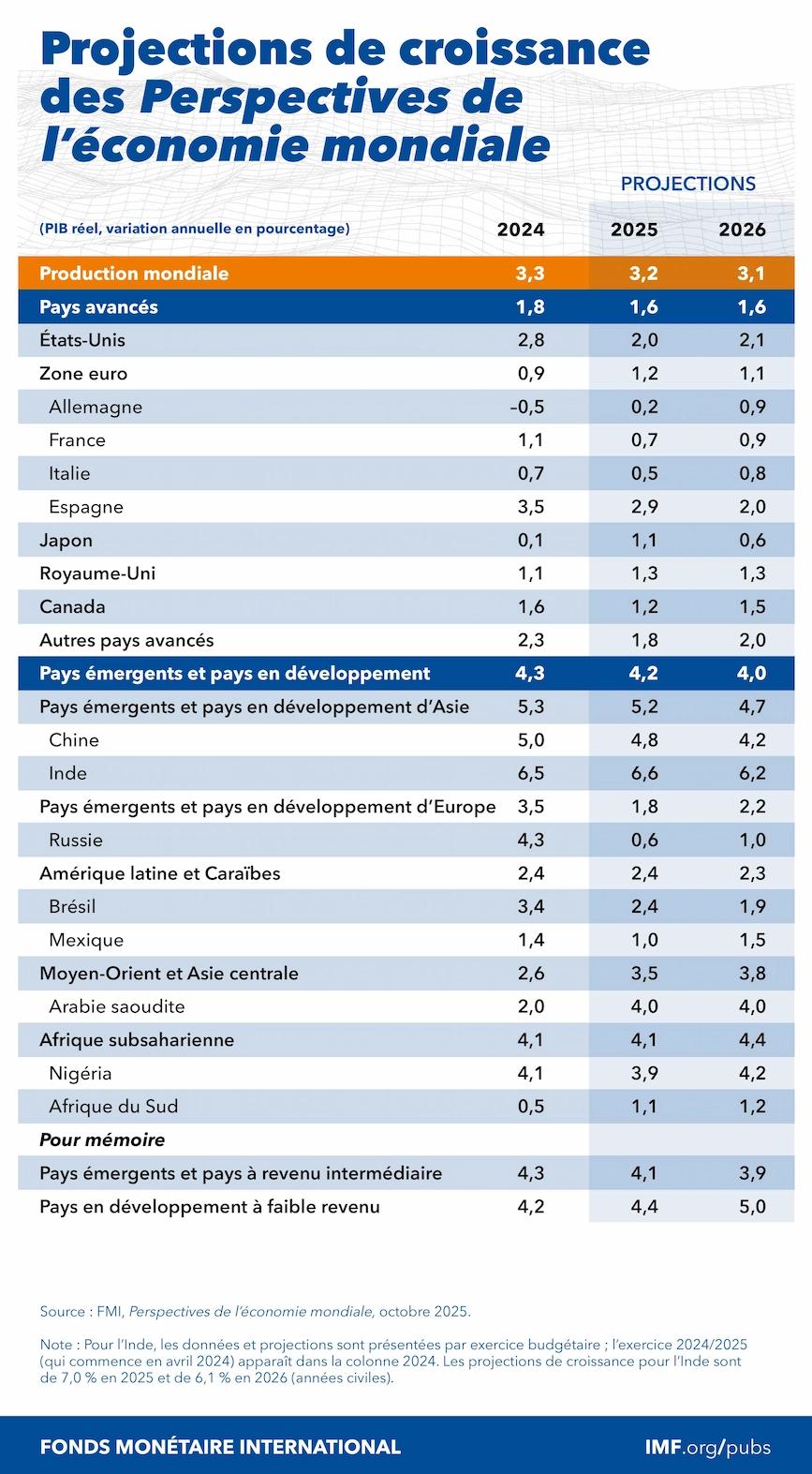
Source: International Monetary Fund
For France, the IMF expects weak growth and persistently high public debt.
Compared with its European neighbours, the situation isn’t disastrous. On a global scale, though, it still raises questions.
P.S. I’m not offering solutions, just interpreting the facts. I’m not claiming to judge political or economic decisions, or cover every detail.