
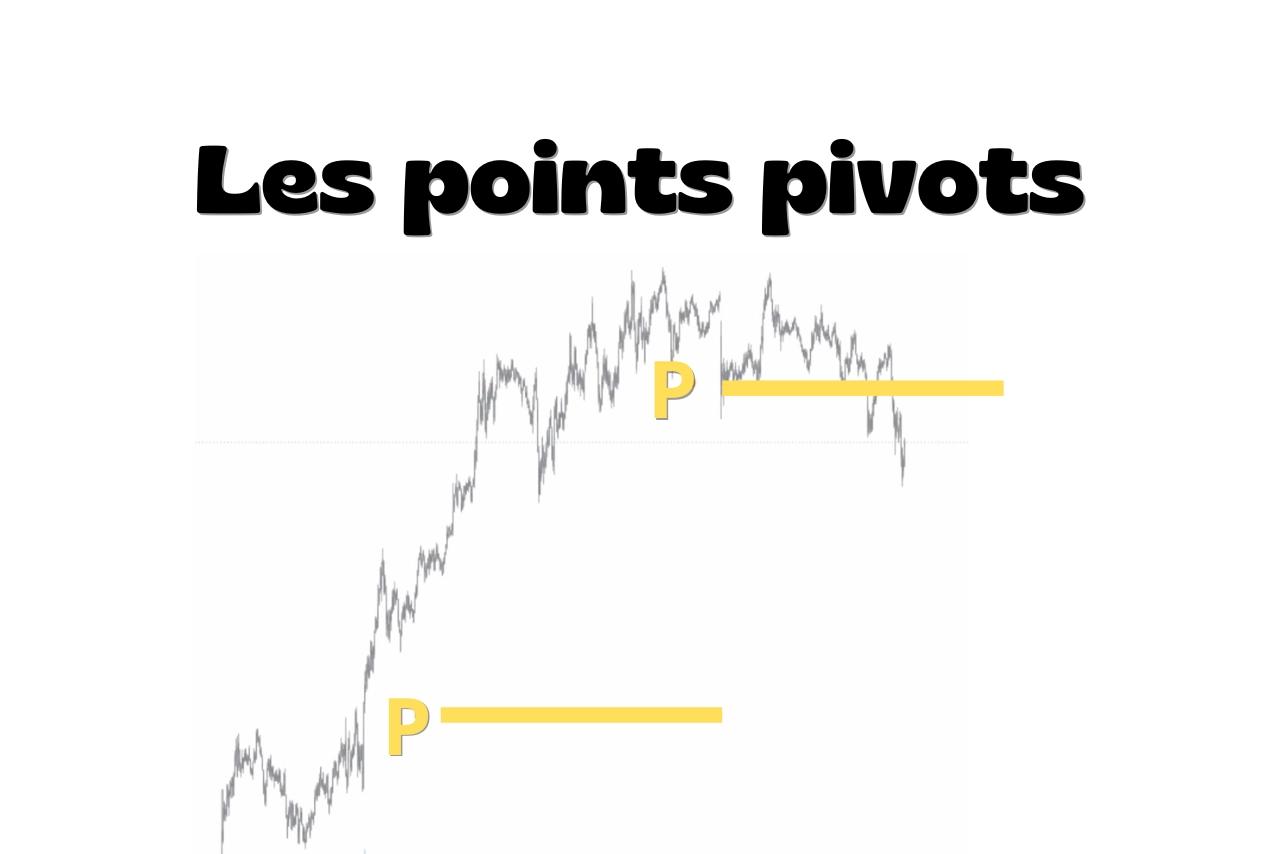
What is a pivot point?
The pivot point (PP) is a level calculated from three prices from the previous day: the high, the low and the close.
PP = (previous day's high + previous day's low + previous day's close) / 3
Many institutional participants use it as a reference for planning entries and exits, or spotting areas where they can unload positions.
On TradingView, the indicator is simply called "Pivot".
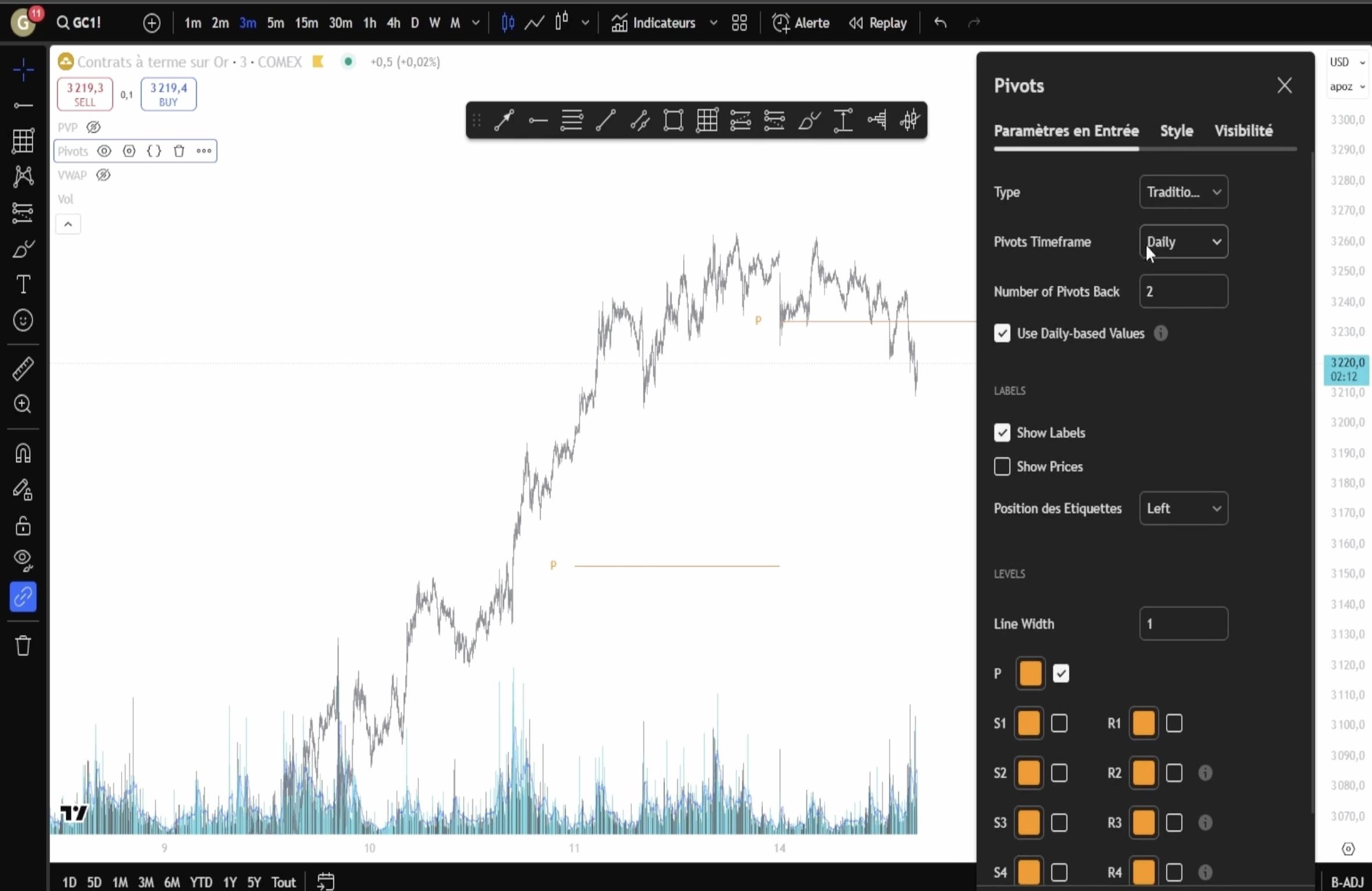
There are several calculation methods, including Traditional, Fibonacci, Camarilla and Woodie, but the traditional daily version remains the standard reference.
The pivot point is recalculated each day using the previous day's data and doesn't change before the close.
Here's a calculation using the previous day's data:
- High = 105
- Low = 95
- Close = 100
PP = (105 + 95 + 100) / 3 = 300 / 3 = 100
Pivot support and resistance levels
The pivot point can also generate a series of derived levels around it:
- S1, S2, S3: support levels below the pivot
- R1, R2, R3: resistance levels above the pivot
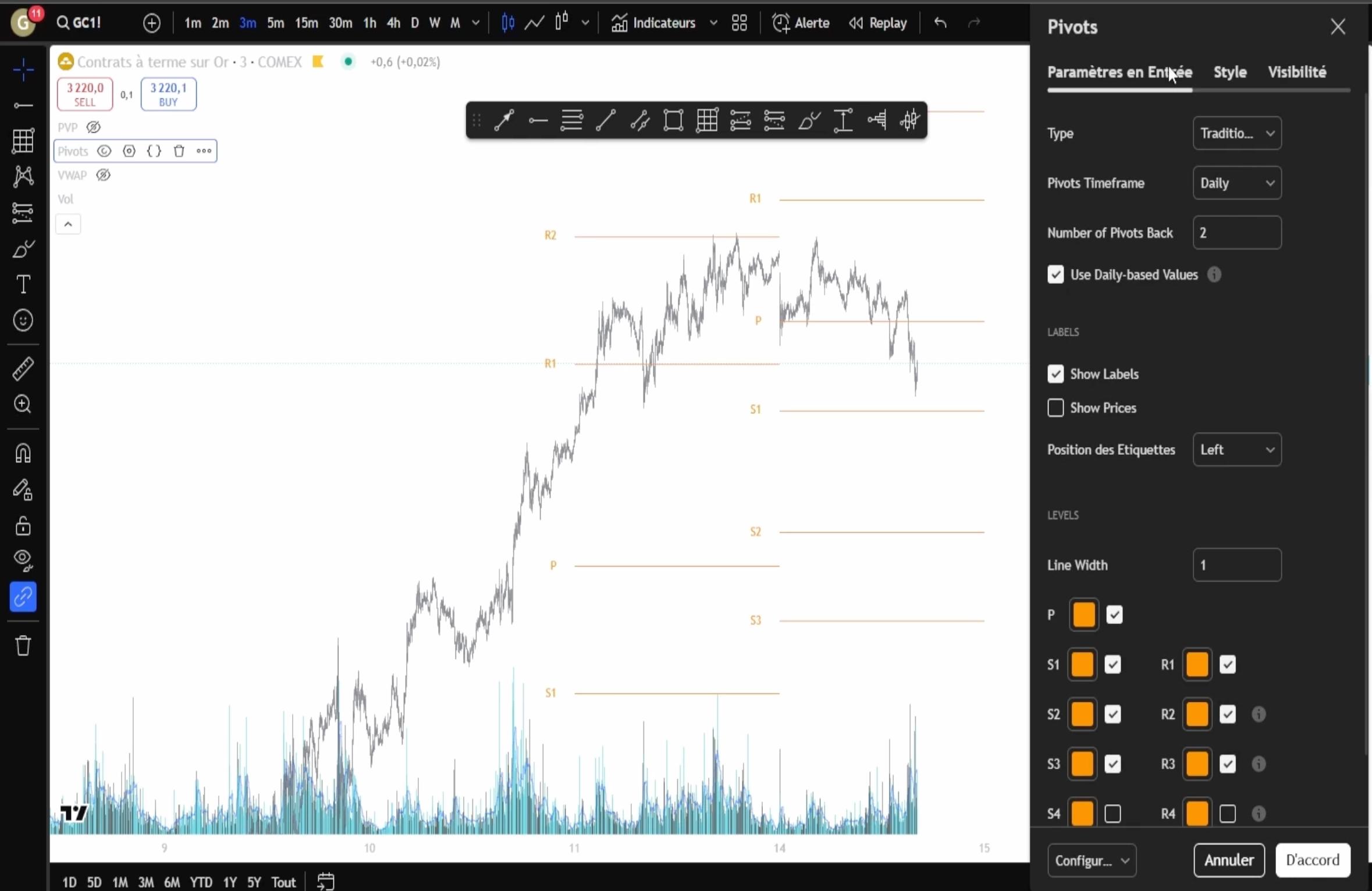
One important distinction:
- With the traditional method, these levels come from the pivot and the previous day's range
- With the Fibonacci method, these levels are projected using Fibonacci ratios
Bots and algorithms monitor these levels automatically.
When price reaches S1 or R2, it can react because automated systems are programmed to respond there, even if it isn't a visible support area or a psychological level.
That's exactly what makes the pivot point worth watching, even if you don't use algorithmic trading yourself.
How the pivot behaves in different market conditions
The pivot's behaviour depends directly on the market's state: is it balanced or imbalanced?
If those concepts are new to you, I explain everything you need to know in this article.
In a balanced market
The pivot acts as a reference for fair value.
Price moves around it, buyers and sellers meet at that level, and both sides contest this point of equilibrium.
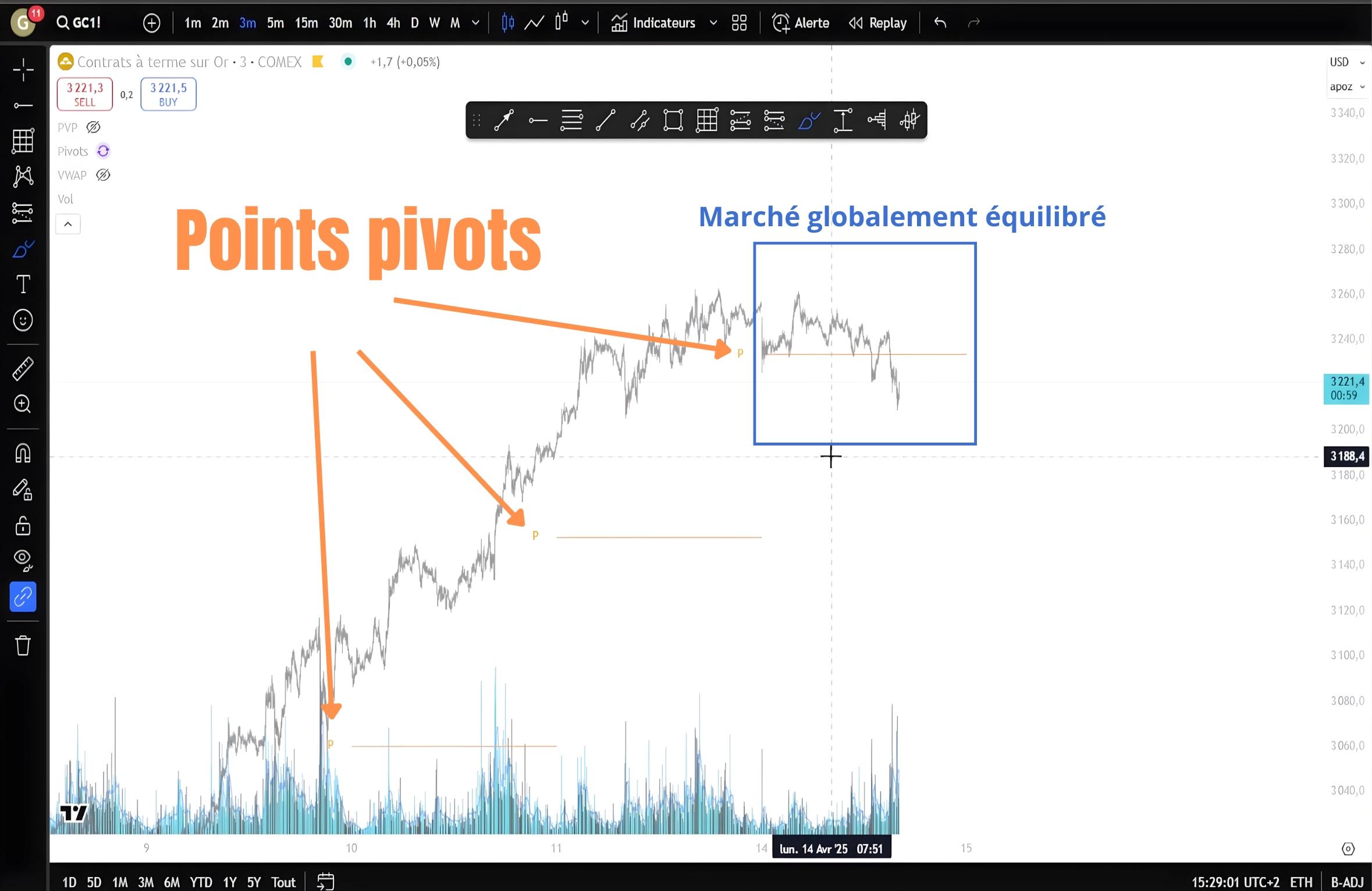
As long as price stays above the pivot, the bias is bullish.
Below it, the bias is bearish.
In an imbalanced market
The pivot takes on a different role.
It no longer represents fair value. Instead, it becomes support or resistance that bots can use to trigger buying or halt a rise.
If price touches the pivot during a downward move, it's a level to watch for buyers stepping in.
If volume confirms the reaction, a long entry may be worth considering.
On the other hand, if price fails to get back above the pivot, it signals that sellers remain in control.
The broken-pivot rule: when the market "pivots"
When price breaks below the pivot and also crosses below the previous day's VWAP, we abandon the bullish scenario.
Both fair-value references have been lost at the same time: the market has shifted, and we need to look for short positions.
This double break is one of the most reliable signals for changing your intraday scenario.
Using the pivot for entries and exits
Entries
In an imbalanced market with an upward flow, a pullback to the current day's pivot is a potential long-entry level to watch.
You don't enter blindly. Wait for confirmation from volume or a meaningful signal that buyers are present.
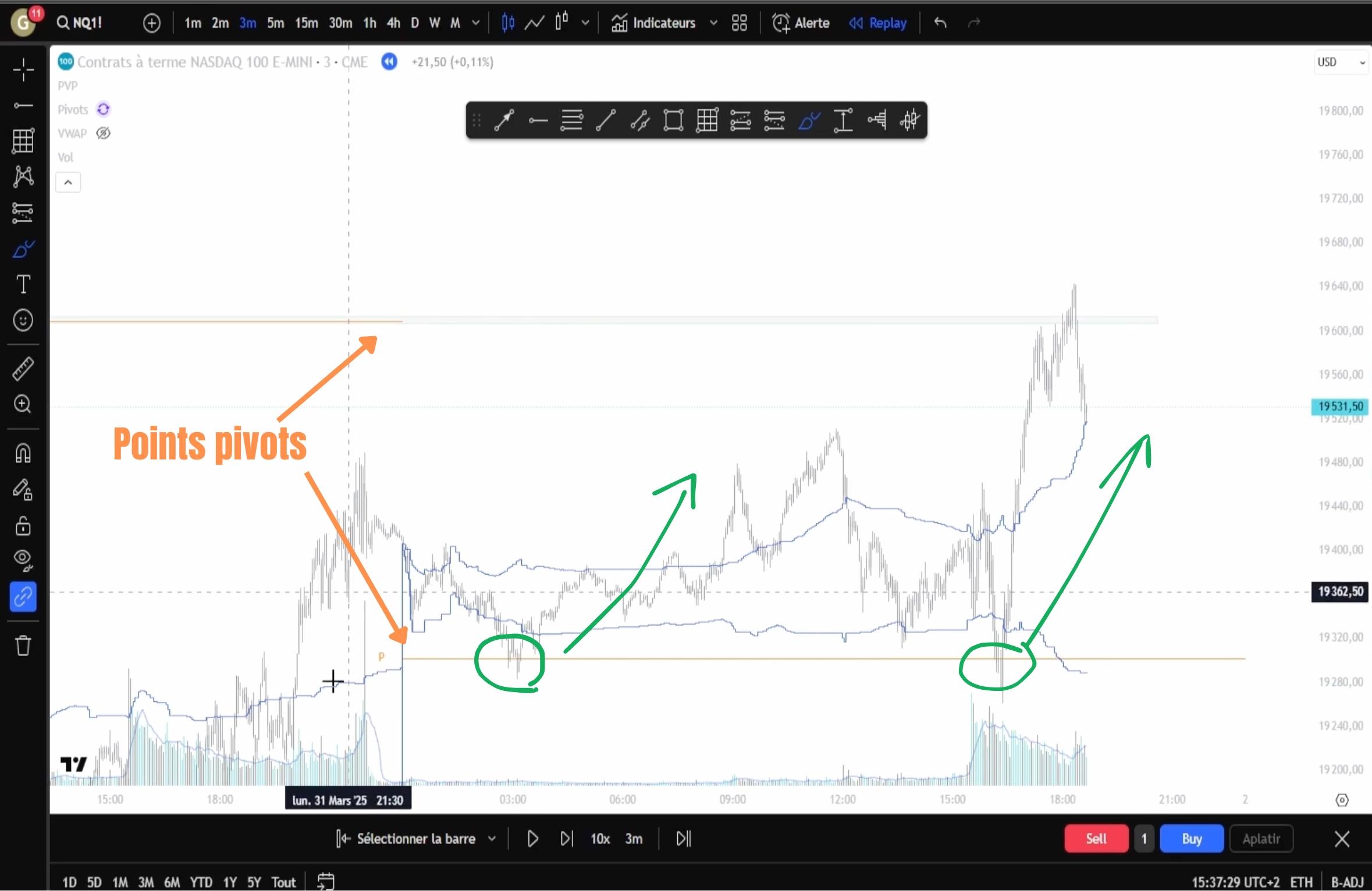
If the pivot lines up with a VWAP standard-deviation band or a Volume Profile value area, the level becomes more relevant.
Several algorithmic levels in the same place increase the likelihood of a reaction.
Exits and take profit
The previous day's pivot can serve as an exit target.
If bots used today's pivot as a trigger to buy, they may also use a previous day's pivot to unload their positions.
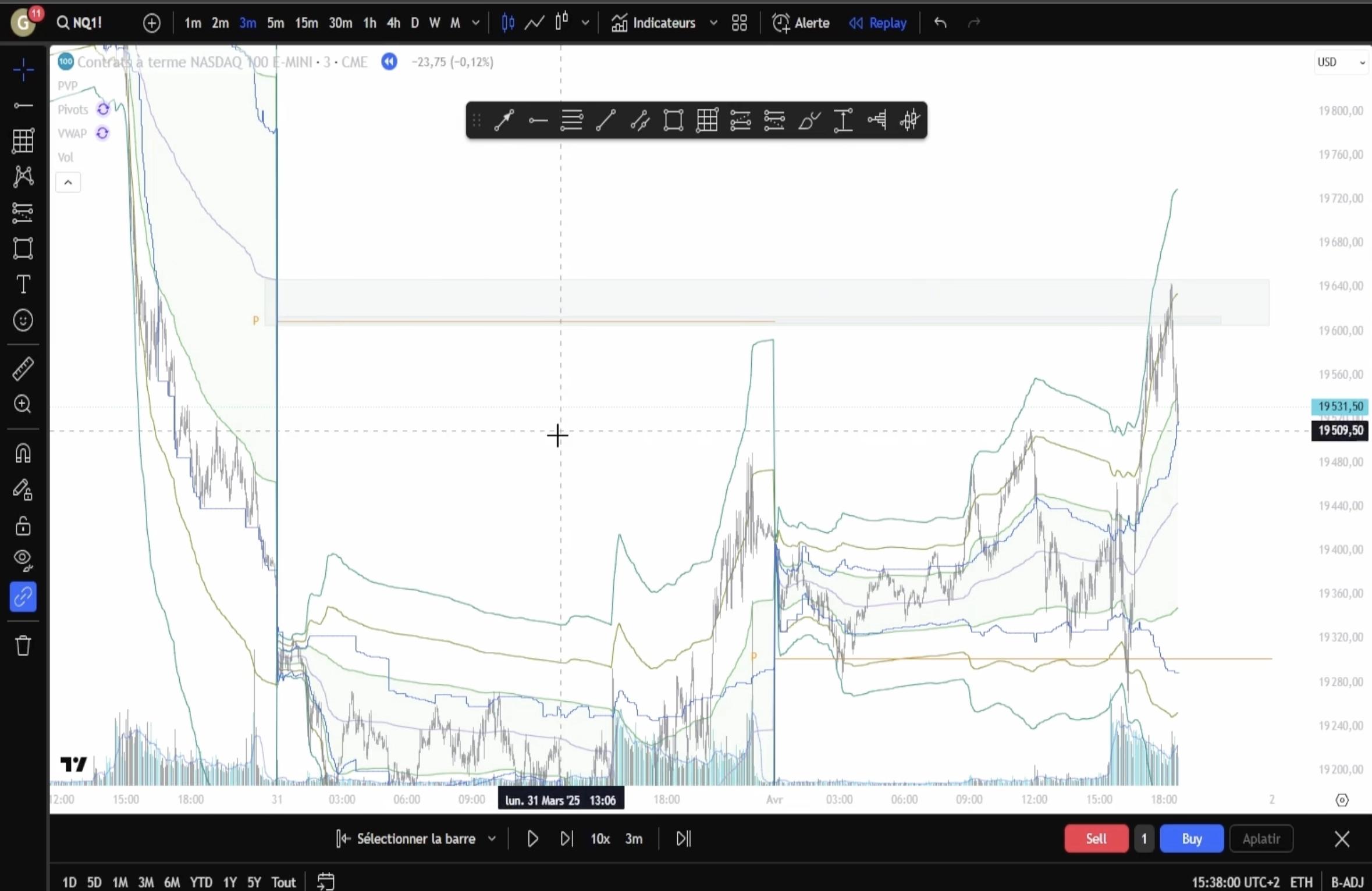
This is a distribution area: a level where institutional buyers gradually sell what they accumulated lower down.
The previous day's pivot, especially if it lines up with the previous day's VWAP, is an excellent area to take profits or look for a short entry.
