
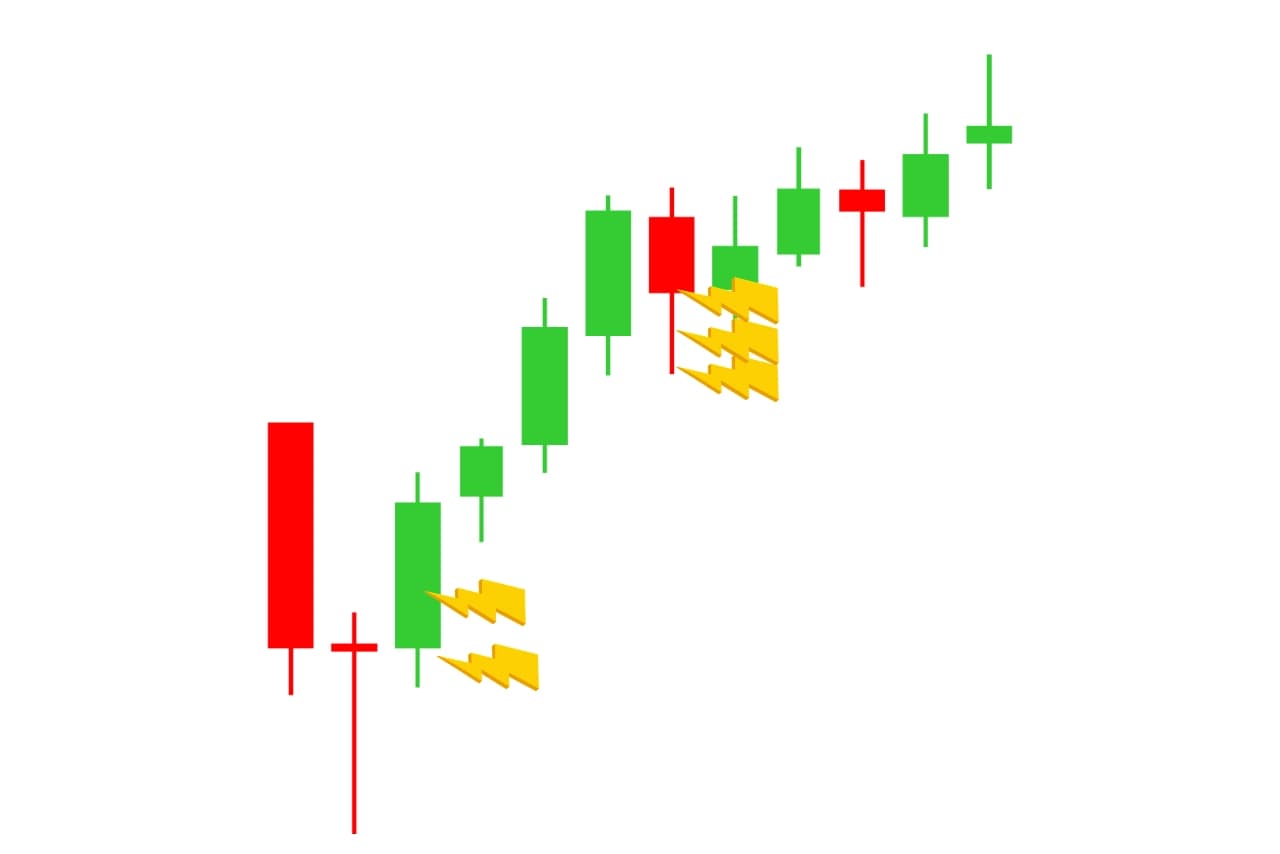
Scalping, also called scalp trading, means opening a position to capture a small price move and closing it a few seconds or minutes later.
How does scalping differ from day trading?
Scalping is a form of day trading because you open and close your position within the same trading session.
A scalp usually lasts less time than other intraday trades, but it takes a lot of screen time.
For example, if you buy gold at 10:00 a.m. to catch a small bounce, you might be out of the trade by 10:01.
A day trader looking to catch a rally over the whole morning might hold the position until noon.
The time and focus scalping takes
You might spend half an hour watching the price and waiting for an opportunity, only to spend a minute in the trade.
You need patience and a willingness to finish the session without a trade if the conditions you’re looking for never materialize.
You also need to stay focused while you wait.
When your signal appears, you may have only a few seconds to decide whether to enter.
Once you’re in, you need to be able to follow the move until you exit without having to take a call or get back to something else.
That makes scalping one of the most demanding trading styles in terms of screen time.
If you have little time to devote to trading, I’d steer clear of scalping.
You can also take this quiz to find out which trading style might suit your personality best.
The four steps of a scalp trade
You prepare for a scalp before the price reaches the level you’re watching.
Since you’re after a short move, a few moments of hesitation can mean missing most of the rise or fall.
The first two steps help you plan the trade. The last two help you decide when to enter and when to exit.
1) Identify the move you want to trade
Start by finding an area on your chart where the price has changed direction before.
If the market has dropped several times after reaching that level, you could look to sell the next time it returns and profit from another pullback.
2) Set your target and stop before entering
Before you enter, decide on the two prices at which you plan to exit.
Your target is the price where you want to take your profit. Your stop is the level where you want to cut the position if the market moves against you.
From your planned entry price, you can compare your potential gain with the loss you’d take if your stop fills at the intended price.
3) Wait for your entry signal
When the price returns to your area, watch for the reaction you expected.
If you’re looking to sell, your signal might be the price starting to turn down again.
Depending on your strategy, you might also look at trading volume to decide whether to enter.
If the price has already dropped, you can let the trade go.
Selling lower than planned puts you closer to your target and leaves less room for profit.
4) Exit the scalp
Once you’re in the trade, you can hold the position until it reaches your target or triggers your stop.
You can also exit early if the move you expected starts to slow.
If you’ve sold short and the price starts rising again before it reaches your target, you can close the position to take the profit that’s still available.
If you think the decline might resume, you can tighten your stop to limit how much of that profit you risk giving back on a bounce.
Watch a gold scalping session
You can watch one of my recorded gold scalping sessions to see how I put these steps into practice.
I used an order flow strategy to decide when to enter and exit my positions.
